Water/Wastewater
An aging liner in a single aeration basin can present serious risks: untreated water escaping into the ground, potential environmental violations, and even regulatory shutdowns. Unfortunately, many smaller wastewater treatment plants (under 500,000 GPD) face this very issue. With only one lagoon and one clarifier—often decades old and with no backup capacity—taking a basin offline for cleaning, relining, or repairs can seem nearly impossible.
Building a new pond might sound like the answer, but in most cases, it’s neither economical nor physically feasible due to site constraints. So, how can operators safely upgrade critical infrastructure without disrupting treatment?
A recent project on Hawaii’s Big Island provided a practical solution. WSI International, a Denver-based equipment manufacturer and engineering services provider, designed a system that allowed a 300,000 GPD extended aeration facility to renovate its lagoon while maintaining treatment performance.
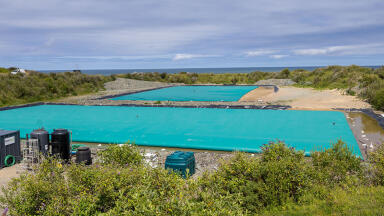
The plant’s utility manager took a proactive step, partnering with WSI to create temporary redundancy. The facility, built in 1995, needed a way to take its 443,000-gallon lagoon offline to inspect and reline its deteriorating liner and remove accumulated grit—without halting operations. The challenge was clear: add backup aeration and clarification within the existing footprint.
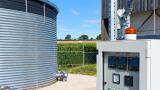
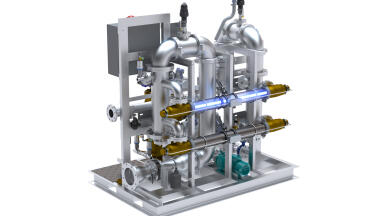
Instead of expanding the site, WSI proposed repurposing the secondary clarifier as a temporary aeration basin, while deploying a Dissolved Air Flotation (DAF) unit to handle clarification. The DAF system was engineered to manage Mixed Liquor Suspended Solids (MLSS) in a much smaller footprint while still meeting effluent quality requirements.
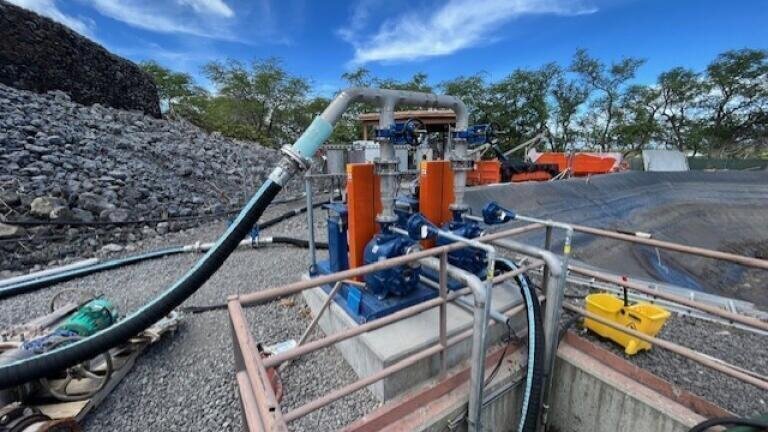
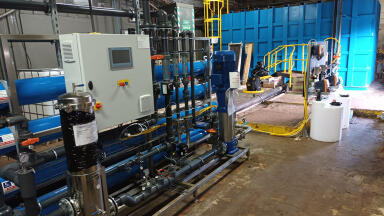
Given the site’s steep topography and gravity-flow layout, WSI installed the integrated DAF system on a compact 38’x14’ pad near the control building. The system included effluent pumping back to the chlorine contact tank and sludge transfer for RAS and WAS operations, allowing seamless operation during the lagoon renovation.
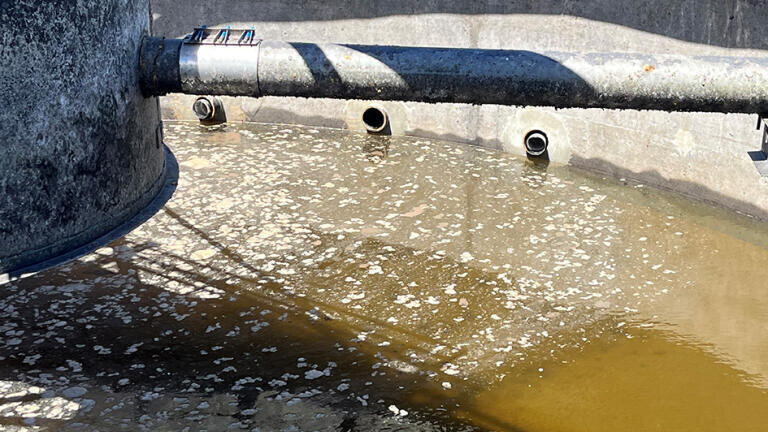
To convert the clarifier into a functioning aeration basin, WSI needed a mixing and oxygen transfer solution that avoided invasive installations. Traditional blowers and grids were impractical, so WSI selected the Landia AirJet system.
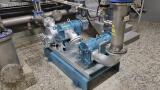
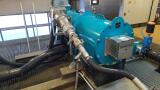
Using a venturi-based design, the AirJet entrains air into recirculating flow, providing both aeration and mixing without disrupting the clarifier’s scum rake or sludge scraper assemblies. Only the nozzles penetrate the tank wall, while the main chopper pump remains outside—simplifying both installation and maintenance.
According to WSI’s Vice President of Engineering, Ben Garcia, the AirJet delivered exactly the right balance: “It provided the oxygen required for biological nutrient removal while keeping solids fully suspended. Landia worked closely with us to configure the system, and it performed exactly as intended.”
By leveraging existing assets and introducing compact, adaptable technologies, WSI enabled the Big Island facility to safely reline its lagoon without service interruptions. The project not only created the long-needed redundancy but also demonstrated a cost-effective model for other small treatment plants facing similar challenges.
 Product directory









-from-Chesterton-House-Farm,-with-Giles-Russell-from-Midland-Slurry-Systems.jpg)
.jpg)
.jpg)