Air clean up
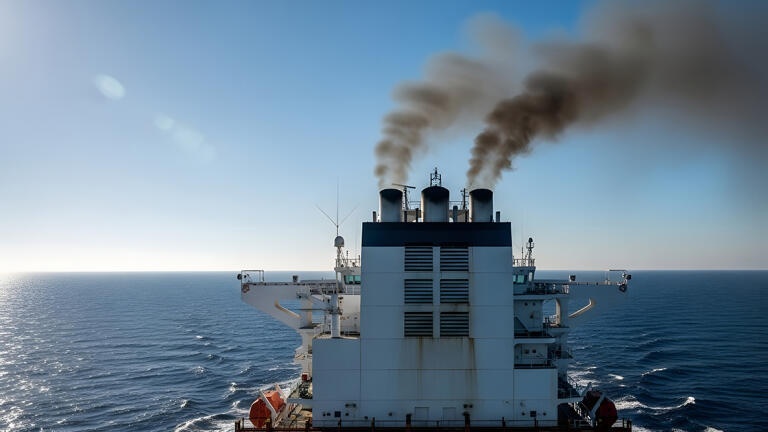
A new framework from DNV aims to establish a standardised approach for measuring and verifying the performance of onboard carbon capture and storage (OCCS) systems in the maritime industry. The recommended practice marks an important step towards accelerating the development and adoption of onboard carbon capture technologies as shipping works to reduce greenhouse gas emissions.
With approximately 90% of the global operational fleet still reliant on fossil fuels*, onboard carbon capture is increasingly being recognised as a practical decarbonisation pathway for vessels where transitioning to low-emission fuels remains technically difficult or economically challenging. At the same time, regulatory momentum is building. The International Maritime Organization (IMO) is currently developing global guidelines for OCCS, with completion expected by 2028.
 Cristina Saenz de Santa Maria
Cristina Saenz de Santa Maria, CEO Maritime at DNV, highlighted the significance of the new framework and the role OCCS can play in maritime decarbonisation.
“Onboard carbon capture and storage has strong potential to support emissions reduction across a significant portion of the existing fleet, particularly given the long operational lifespan of many vessels,” she said. “According to our Maritime Forecast to 2050, establishing CO₂ offloading infrastructure at just 20 of the world’s largest ports could reduce total global fleet CO₂ emissions by 9%. Through this recommended practice, we aim to create a shared technical language that supports industry collaboration and accelerates the advancement of onboard carbon capture technologies.”
The new framework, DNV RP 0698, titled Performance of Onboard Carbon Capture and Storage Systems, is based on mass balance principles and introduces a harmonised methodology for evaluating OCCS performance. The recommended practice defines key performance indicators including carbon capture rate, total captured CO₂ volume, atmospheric emissions, and gross capture efficiency.
Designed to remain technology-neutral, the framework supports multiple carbon capture approaches, including pre-combustion, post-combustion, oxy-fuel systems, and emerging capture technologies. It also establishes a structured third-party verification process covering system documentation, measurement methodology, performance calculations, and uncertainty assessment.
Chara Georgopoulou, Head of Maritime R&D and Advisory Greece at DNV, emphasised the broader value of adopting a standardised measurement approach.
“This recommended practice creates a structured methodology for assessing the complete performance profile of onboard carbon capture systems rather than focusing solely on capture volume,” she said. “It enables ship designers, shipyards, OCCS manufacturers, and vessel owners to define and verify performance across both retrofit and newbuild projects, improving alignment among stakeholders and supporting more informed investment and deployment decisions.”
As shipping faces increasing pressure to decarbonise, DNV’s new recommended practice provides a common framework that could help accelerate the deployment, validation, and scalability of onboard carbon capture and storage solutions across the global fleet.
 Product directory












_shutterstock_2296088597.jpg)



.jpg)