Water/Wastewater
Published over 9 years ago. See the latest and most current information on Water/Wastewater.
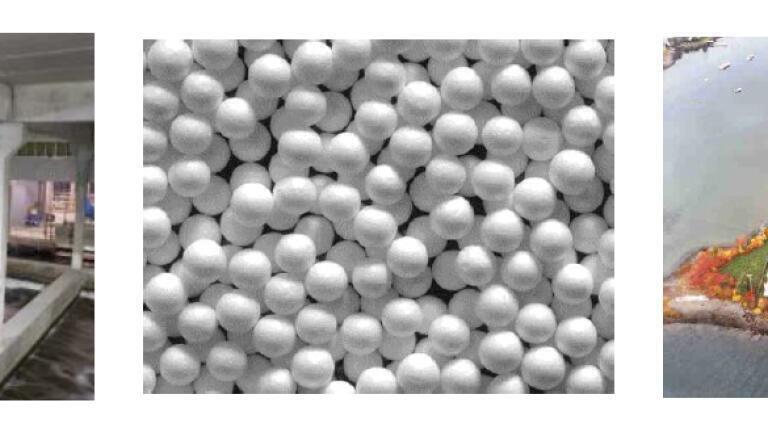
The City of Portsmouth in southeastern New Hampshire is upgrading its Peirce Island WWTF with a Veolia BIOSTYR® Biologically Active Filter (BAF) system to remove BOD and Total Nitrogen (TN). By installing full Biological Nutrient Removal (BNR) capabilities, the plant will be able to meet strict EPA mandates for future TN discharge into the Piscataqua River.
BIOSTYR® was selected as the best option for the Peirce Island WWTF upgrade based on extensive engineering evaluations, including two separate pilot studies. The first pilot study, completed in 2012, was conducted alongside MBBR and magnetite-ballasted activated sludge technologies. This evaluation determined BIOSTYR® to be the best technology based on many factors including capital cost, operating cost, system footprint, treatment reliability and ease of operation. A second pilot study was conducted in 2014 using only the BIOSTYR® system to further validate the hydraulic and pollutant loading rates to be used in the final design of the system. The final design includes 6 BIOSTYR® treatment cells for combined BOD removal and nitrification in a first stage, followed by 6 BIOSTYR® cells for denitrification.
BIOSTYR® is a compact, efficient, versatile and operator-friendly technology that will fit into the Peirce Island WWTF’s existing site. The compact size will allow the BIOSTYR® to be retrofitted within the plant’s existing footprint, saving time and money by negating the need for any plant expansion outside of the existing fence line. The BIOSTYR® system is expected to be operational by the end of 2019, and will provide the Peirce Island WWTF the ability to meet 8.0 mg/L Total Nitrogen levels with the future potential to meet levels as low as 3.0 mg/L.

 Product directory