Water/Wastewater
A major new study has revealed widespread contamination from toxic “forever chemicals” throughout the Solent marine ecosystem, raising fresh concerns about environmental pollution, wildlife safety, and public health in the UK.
Researchers from the University of Portsmouth and the Marine Conservation Society have published their most comprehensive investigation yet into per- and polyfluoroalkyl substances (PFAS) in coastal waters between Portsmouth and the Isle of Wight.
The peer-reviewed research found PFAS contamination in seawater, seabed sediment, treated wastewater, seaweed, fish, crabs, and even harbour porpoises — showing that these persistent industrial chemicals are now embedded throughout the Solent food web.
PFAS are a group of nearly 15,000 synthetic chemicals widely used since the 1950s in products such as non-stick cookware, waterproof clothing, food packaging, firefighting foam, and industrial manufacturing materials.
Because PFAS do not easily break down in nature, they accumulate in the environment and inside living organisms over time. This persistence has earned them the nickname “forever chemicals.”
Scientists have linked PFAS exposure to serious health risks, including immune system disruption, liver damage, hormonal changes, reproductive and developmental issues, and certain cancers.
The study tested both newly collected samples and historical monitoring data from across the Solent region.
Researchers discovered that concentrations of PFOS — one of the most tightly regulated PFAS compounds — exceeded UK and EU legal safety limits for coastal waters by more than 13 times at sampled locations.
Two wastewater treatment plants were identified as major PFAS sources: Budds Farm wastewater treatment plant in Portsmouth and Peel Common wastewater treatment plant in Fareham. Together, these facilities serve around 650,000 people and were found to release multiple PFAS compounds into surrounding marine environments through treated wastewater discharge.
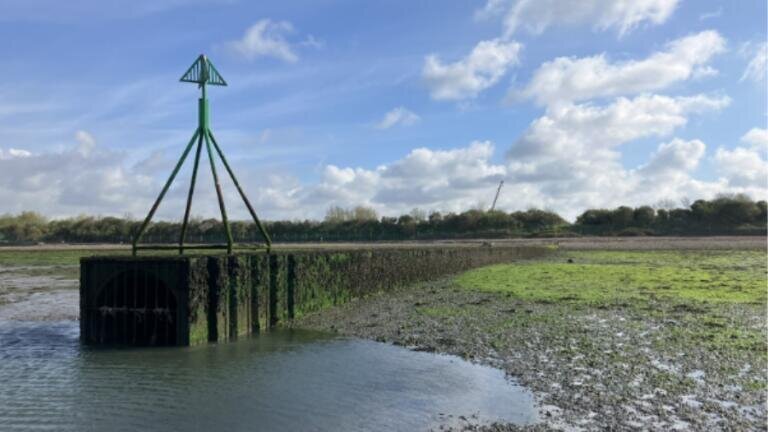
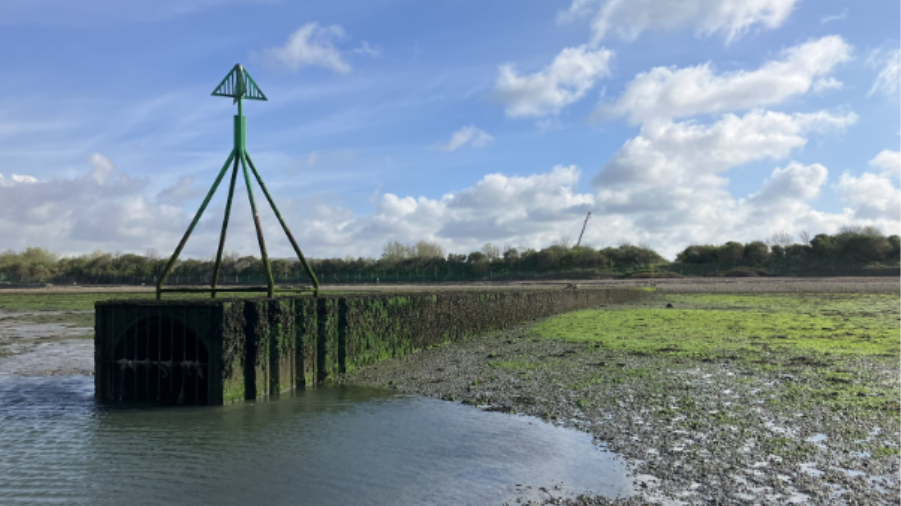 Budds Farm wastewater treatment plant overflow pipe at Langstone Harbour. Credit: Professor Alex Ford
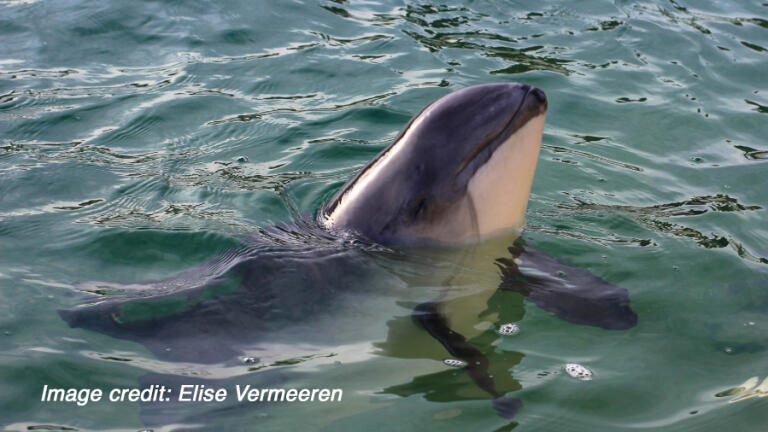
Among the wildlife tested, harbour porpoises contained the highest PFAS concentrations, particularly in liver tissue where contamination levels exceeded ecological safety thresholds.
Although many individual species appeared to remain within legal contamination limits when chemicals were assessed separately, researchers warned that current regulations fail to account for the combined effects of multiple PFAS compounds.
Using a cumulative toxicity approach, scientists found that most sampled species exceeded a health benchmark established by the European Food Safety Authority.
Professor Alex Ford said the findings highlight a major gap in current environmental regulation:
“Most species fall within legal limits when individual chemicals are assessed in isolation, but when you consider the combined chemical burden, the picture becomes far more concerning.”
The research also mapped widespread infrastructure linked to PFAS pollution risks across the Solent area, including 194 combined sewer overflow (CSO) outfall points and 546 historic landfill sites located near coastal waters.
Scientists say these sites may contribute to ongoing PFAS contamination entering marine ecosystems.
Dr Henry Obanya, lead author of the study, described the scale of contamination as alarming:
“PFAS contamination is not confined to one area or one species. We found these chemicals throughout the entire food web — from seaweeds and invertebrates to fish and marine mammals.”
The findings arrive amid increasing political debate over PFAS regulation in the UK.
An earlier PFAS study by the same research team was cited in the UK Parliament during discussions around stricter drinking water protections. Liberal Democrat MP Munira Wilson previously introduced proposals calling for legal PFAS limits in UK drinking water supplies.
Currently, England and Wales still do not have statutory PFAS limits for drinking water, although regulators have expanded monitoring requirements for water companies.
Meanwhile, the European Union is advancing broad PFAS restrictions across thousands of products. Long-chain PFAS chemicals were also added to the global Stockholm Convention in May 2025, with a worldwide ban on certain PFAS chemicals expected to begin in December 2026.
Dr Francesca Ginley from the Marine Conservation Society said the evidence now clearly supports stronger nationwide restrictions on PFAS chemicals:
“The only effective solution is to stop PFAS pollution at its source. The UK Government must act urgently to protect marine ecosystems, wildlife, and public health.”
Environmental advocates argue that without tougher regulation, forever chemicals will continue accumulating in oceans, wildlife, and human populations for decades to come.
The Solent is internationally recognised for its ecological importance and supports diverse marine habitats, fisheries, and protected wildlife species.
Scientists warn that the growing presence of PFAS in UK coastal waters could have long-term consequences for marine biodiversity, seafood safety, human health, water quality, and coastal ecosystems.
The latest research adds to mounting global evidence that stronger PFAS monitoring, regulation, and pollution prevention measures are urgently needed.



 Product directory


























.jpg)