Water/Wastewater
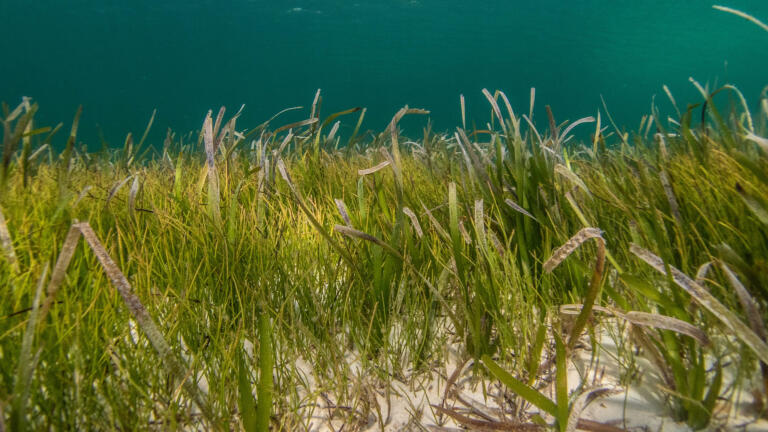
New research from Queen’s University Belfast has revealed alarming levels of nitrogen pollution in seagrass meadows across Northern Ireland, including sites protected by marine conservation laws. The study found that every seagrass meadow tested within Northern Ireland’s marine protected areas exceeded safe nitrogen limits, with pollution linked primarily to agricultural runoff and sewage discharge.
Published in the journal Marine Pollution Bulletin, the research provides the first region-wide assessment of seagrass health in Northern Ireland using biochemical indicators. Seagrass meadows are among the most valuable marine ecosystems in coastal waters because they store carbon, support young fish and shellfish populations, stabilise sediment and help protect shorelines from storms and erosion. They also form an important part of the cultural heritage of coastal communities across Northern Ireland where fishing and foraging traditions have existed for generations.
Researchers collected seagrass samples from nine meadows stretching from Strangford Lough to Waterfoot Bay. Despite all sites being located within legally protected marine areas, every meadow recorded nitrogen pollution levels above the threshold considered safe for healthy seagrass growth.
The study identified two critical nitrogen thresholds that could help environmental agencies detect ecosystem decline earlier. Researchers found that when nitrogen levels rise above 1.8%, seagrass growth begins to deteriorate. Once levels exceed 2.8%, meadow decline accelerates rapidly, with even small increases in pollution causing major plant losses.
Lead researcher Heidi McIlvenny, a PhD student at the School of Biological Sciences, explained that seagrass leaves provide a long-term record of water pollution because the plants absorb nutrients directly from the surrounding water. She said this gives researchers a clearer picture of pollution over time compared with a single water sample.
The research team analysed international data from 13 countries to establish nitrogen thresholds before testing Northern Ireland’s seagrass meadows. According to McIlvenny, not one meadow sampled fell below the safe nitrogen limit.
The study identified Dundrum Bay as one of the most concerning examples of seagrass decline. Although officially classified as healthy, researchers found nitrogen levels there were almost double the amount seagrass can tolerate. Surveys over the last decade have also recorded thick green algae covering large parts of the meadow.
In contrast, seagrass at Castle Espie in Strangford Lough was found to be thriving. Researchers say nearby wetlands and reedbeds naturally filter pollutants before they reach the water, demonstrating that seagrass recovery is possible when pollution sources are controlled.
Senior Lecturer Dr Sarah Helyar said the findings show that legal protection alone is not enough to protect marine ecosystems. She explained that seagrass can either thrive or collapse depending on what is happening on land within surrounding catchments.
The researchers argue that current environmental monitoring focuses too heavily on visible seagrass loss, meaning damage is often identified too late. Instead, they recommend using seagrass tissue chemistry as an early warning system to detect nutrient stress before ecosystems reach the point of collapse.
The study concludes that recovery is achievable if pollution is tackled at its source through improved management of agricultural runoff, investment in sewage treatment infrastructure and greater integration between land and marine conservation policies. Researchers say marine conservation efforts cannot stop at the coastline and must address pollution entering the sea from surrounding land.
The full research paper, Revised nitrogen benchmarks identify a critical transition zone in seagrass meadow degradation, is available via ScienceDirect.



 Product directory

























.jpg)