Water/Wastewater
BIO-UV Group, a leader in UV-based water treatment technologies, has completed successful testing of a new containerised ballast water treatment system tailored to meet the emerging needs of the floating offshore wind industry.
As floating offshore wind projects expand worldwide, the challenge of managing ballast water in compliance with international environmental standards has grown. The mobility of these offshore platforms across territorial waters necessitates robust systems to prevent the transfer of invasive marine species.
"While traditional maritime sectors have made notable progress in ballast water compliance, the floating wind sector is only now beginning to address its responsibilities under the Ballast Water Management Convention," explained Charlene Ceresola, Project Manager at BIO-UV Group. “Our containerised solution provides a scalable, mobile answer to this emerging need.”
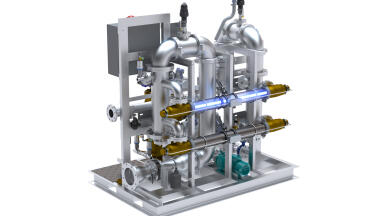
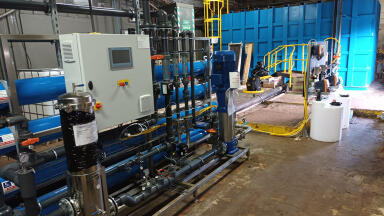
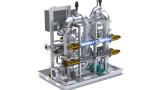
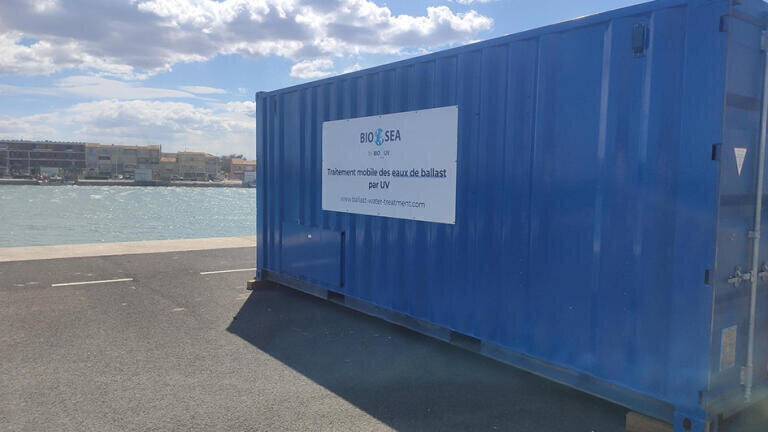
The project, backed by the European Union’s ELBE EUROCLUSTER programme in 2024, adapts BIO-UV’s type-approved BIO-SEA system for integration into a standard TEU shipping container. This format allows for on-site treatment of ballast water during the assembly, transport, and maintenance of floating wind installations.
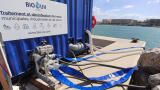
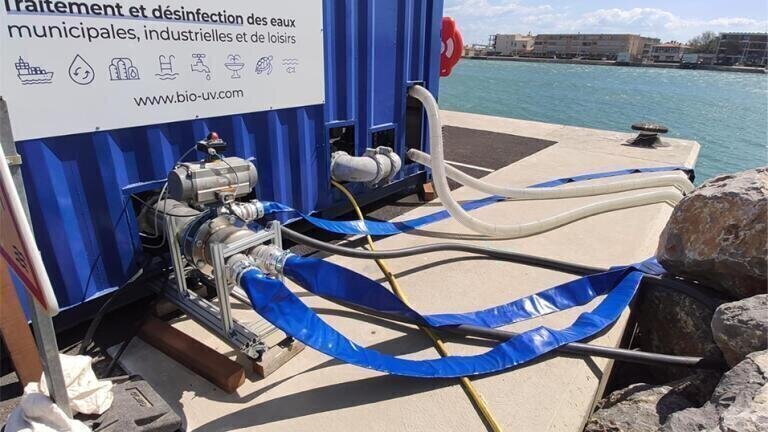
Initial testing was conducted at the Port-la-Nouvelle, operated by Euroports in France, using a BIO-SEA B02-0340 unit with a 300 m³/h treatment capacity. Unlike onboard systems, this containerised version must manage filter backwash locally, requiring an additional waste treatment line for land-based disposal.
The prototype was put through real-world operational tests to assess its performance under practical constraints such as power supply limitations, pressure drops, and connection compatibility. The system successfully delivered BIO-SEA’s proven dual-stage treatment process — filtration followed by UV disinfection — and managed backwash effluents in a way that met environmental disposal standards.
Although full biological validation was limited by sampling constraints and variable water conditions, the treated discharge consistently met the IMO D-2 standard for ballast water.
Phase One of the project (January–June 2024) focused on engineering and testing the containerised system. Phase Two (July–December 2024) expanded the project scope to include market research and stakeholder engagement, setting the stage for future deployments and commercial uptake.
“This system's portability and modularity make it highly versatile — not just for offshore wind farms, but also as an emergency solution for vessels with failed ballast water management systems,” said Ceresola. In such cases, the units could be leased or purchased and deployed on barges or dockside to ensure environmental compliance, offering ports and shipping operators a critical backup option.
The first commercial deployment of this containerised system took place earlier this year under a "ballast as a service" model, allowing water treatment at virtually any location.
Following the project's success, BIO-UV Group has already attracted interest from multiple Mediterranean ports — particularly those engaged in the EU-funded Treasure program, which supports research and innovation in port water management and environmental practices.
“With this solution, we can now help ports and industrial sites take greater control over water management. This initiative reflects our commitment to sustainable innovation and positions BIO-UV Group at the forefront of environmental stewardship in the maritime sector,” added Ceresola.

 Product directory