-and-Lakeside-Equipment-Corporation-have-worked-cl.jpg)
-have-worked-wonders-for-the-.jpg)
Water/Wastewater
A wastewater treatment system, featuring biological equipment from Lakeside Equipment Corporation, has marked an impressive milestone—30 years of reliable service at one of the largest National Guard bases in the United States.
Back in 1994, the base faced mounting challenges with its aging treatment plant. The original disc aerators in the circular aeration basin were no longer effective, and compliance issues were becoming increasingly frequent. To address these concerns, the National Guard enlisted Marlar Engineering—now part of Halff Engineering—for a complete overhaul of its wastewater treatment infrastructure.
“In addition to the age of the 500,000-gallon-per-day facility,” explained Mike Marlar, now Vice President of Halff Engineering, “there was a serious problem with excessive infiltration. During wet weather, flows often surged to seven times the plant’s design capacity. It’s no surprise the facility struggled to remain in compliance.”
Compounding the issue was the growing population at the base, which had expanded its training operations and arms ranges. The surge in personnel created an urgent need to double the treatment capacity.
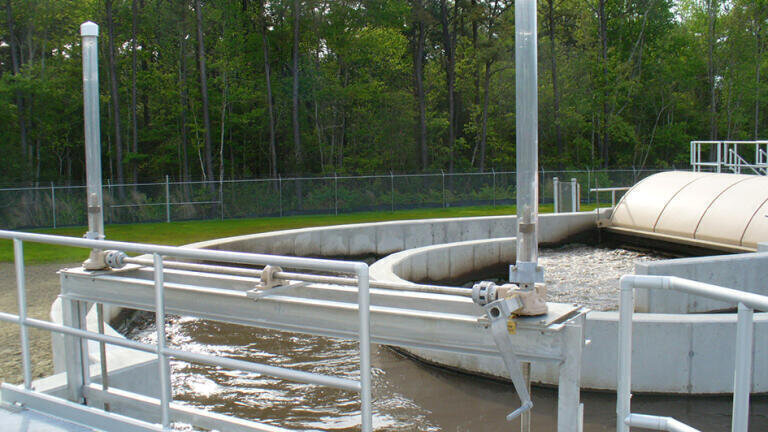
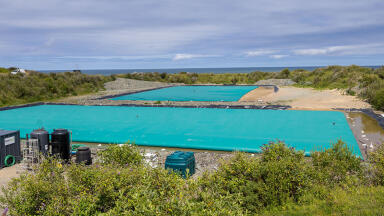
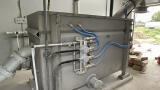
After extensive evaluation, Marlar Engineering selected Lakeside’s activated sludge oxidation ditch process. Two parallel oxidation ditches, each equipped with covered Magna Rotors, were constructed to handle a combined flow of 1 million gallons per day.
“Three decades later,” said Marlar, “the system is still running smoothly. It’s never failed to meet compliance. That’s a remarkable achievement.”
The project also included a complete rehabilitation of the collection system. A new headworks facility was installed with a diversion box, allowing high flows during storms to be redirected to a newly constructed 1.5-million-gallon equalisation basin. Once the weather subsided, the stored flow was reintroduced to the plant for treatment.
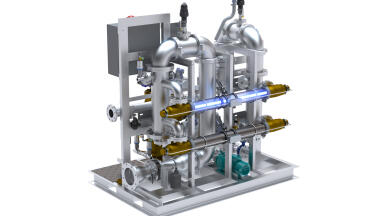
From the oxidation ditches, aerated wastewater flows into two clarifiers operating in series to settle out solids. Tertiary treatment is provided by a Dynasand filtration system, followed by disinfection through one of the state’s first ultraviolet (UV) light systems for coliform and faecal coliform bacteria removal.
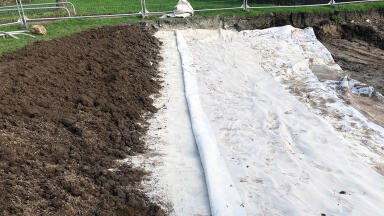
To support comprehensive flow monitoring, Parshall flumes were installed on both the influent and effluent lines. Sludge management initially relied on reed beds, later replaced with sand drying beds for greater efficiency.
“When the plant went online in 1995, it received the National Guard Bureau’s Environmental Award,” Marlar noted. “Since then, we’ve only had one upgrade in 2015—mainly replacing UV lights and some minor components. That’s a testament to the system’s stability and design.”
Halff Engineering continues to oversee the plant's operation and maintenance, with a licensed operator on site since day one.
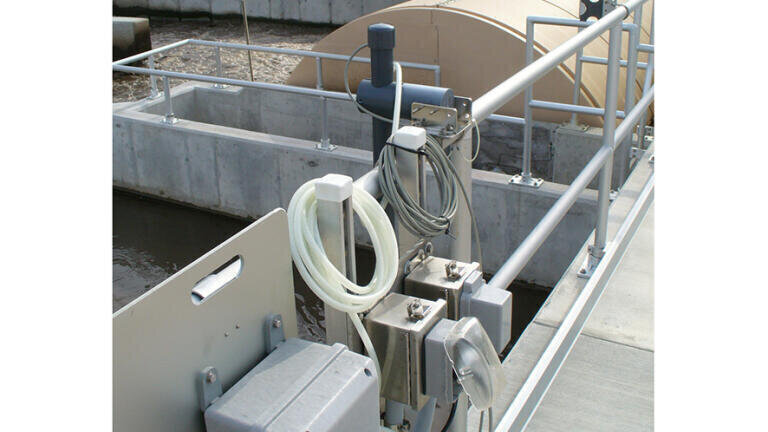
“In terms of maintenance,” Marlar said, “the system uses just two Lakeside Rotors compared to the 20–40 diffusers found in some aeration systems, which translates to fewer components to maintain or replace. Lakeside’s equipment is incredibly robust, easy to maintain, and well-engineered.”
“With over 30 years of experience working with Lakeside systems across military and municipal sites, I can confidently say this plant is among the top five percent of all treatment facilities I’ve been involved with in terms of longevity and performance.”
 Product directory








.jpg)

.jpg)