Water/Wastewater
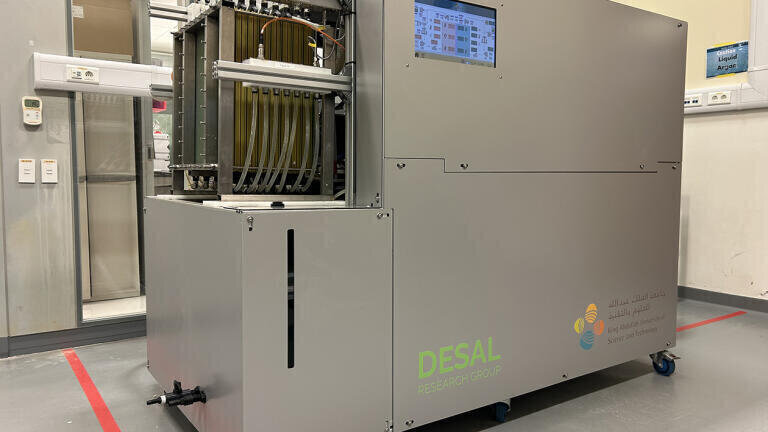
Researchers at King Abdullah University of Science and Technology (KAUST) have unveiled a next-generation desalination membrane that dramatically improves the efficiency of producing freshwater from seawater and highly concentrated brines. Now undergoing pilot-scale testing on the KAUST campus, the technology marks an important step toward real-world deployment.
As population growth and climate change intensify pressure on global water resources, the need for affordable and sustainable freshwater solutions has never been greater. KAUST’s newly developed polymer membrane addresses this challenge by delivering exceptionally high water flux and salt rejection at ambient temperature and pressure, reducing both energy use and operating costs compared with conventional desalination technologies.
The innovation lies in the membrane’s ultra-thin structure and subnanometer-sized pores. These pores allow water vapor to pass through while effectively blocking salts and contaminants, including boron. Even when processing difficult-to-treat concentrated brines, the membrane maintains approximately 99% salt rejection and achieves complete boron removal.
Desalination is essential to water security in arid regions, yet existing technologies are typically energy-intensive and economically viable mainly at large scales. They also struggle to handle high-salinity brines. The KAUST membrane overcomes these limitations. Just one square meter of the material can produce around 40 litres of freshwater per hour from seawater at room temperature, consuming only 1.88 kilowatt-hours per 1,000 litres of water produced. When the operating temperature is raised to 60°C, output increases to 238 litres per hour, opening the door to even greater efficiency when powered by low-grade or waste heat.
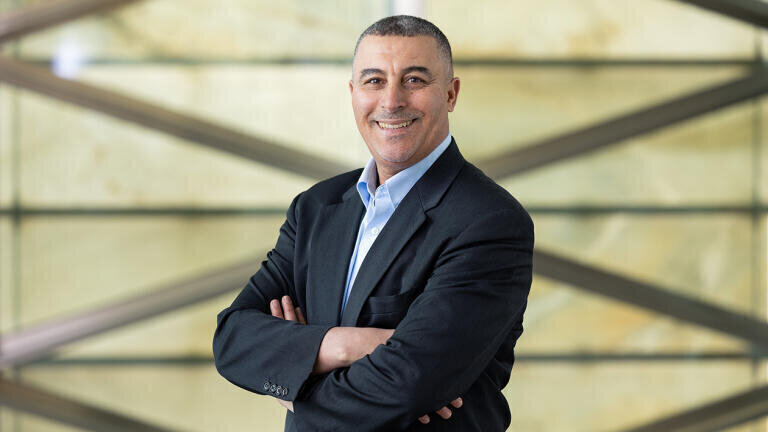
“Water and energy are inseparable challenges, and this technology addresses both,” said Professor Noreddine Ghaffour, lead author of the study and a specialist in desalination and water treatment at KAUST. “Our results show that it is possible to desalinate not only seawater but also highly concentrated brines using far less energy than traditional methods.”
Beyond freshwater production, the membrane could help manage brine streams from existing desalination facilities and wastewater generated by oil and gas operations, reducing the environmental footprint of both water recovery and energy production.
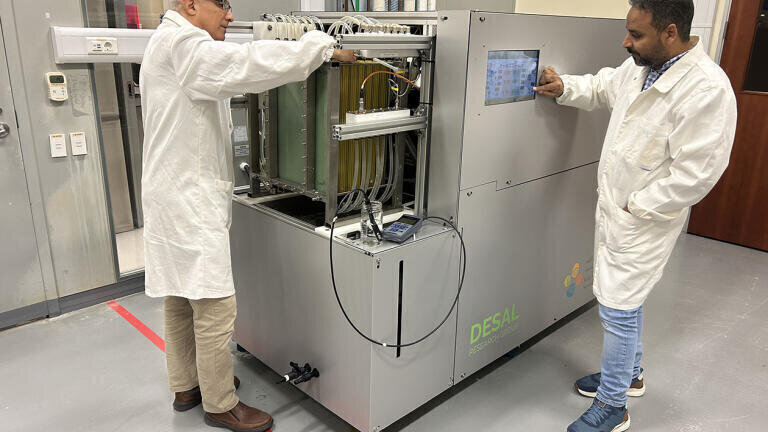
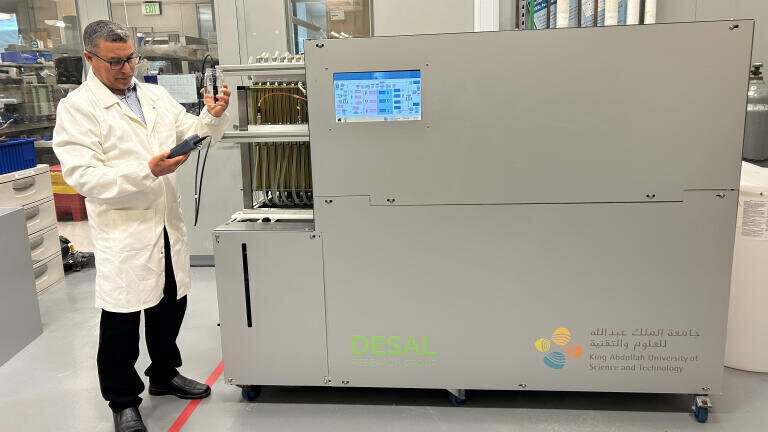
Unlike many advanced desalination concepts that remain confined to laboratory experiments, the KAUST membrane is already being tested at pilot scale, with growing interest from industrial partners. Ongoing trials will evaluate the membrane’s scalability and long-term durability under real operating conditions, helping define its future role in municipal and industrial water systems.
“KAUST provides an environment where fundamental materials science can be translated into practical solutions for urgent global needs,” said Professor Ghaffour.
 Product directory

















.jpg)

.jpg)