Water/Wastewater
Published over 17 years ago. See the latest and most current information on Water/Wastewater.
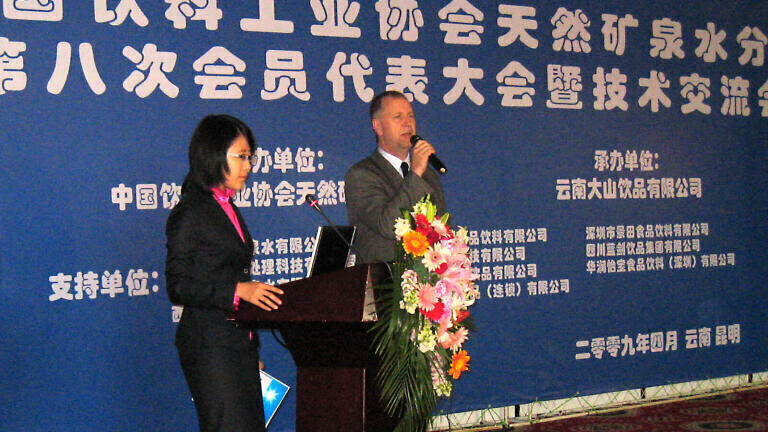
In a presentation to members of the Chinese Mineral Water Sub-Association* held in April in Kunming, China, Hanovia’s Sales and Marketing Director Keith Watson told members how medium pressure UV technology can help solve the ’bromate issue’ for bottled water producers. He also provided examples of how Hanovia’s (UK) UV technology is helping producers worldwide purify their water without resorting to ozonation, and with none of the unwanted by-products, such as bromate (a Class 2B carcinogen), that are often associated with ozone treatment.
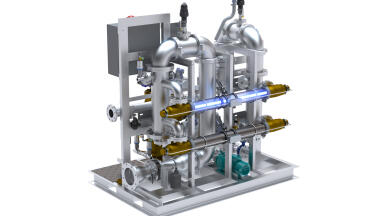
One of the reasons for the meeting was to help bottled water producers understand the impending Chinese Mineral Water Standard (GB8537-2008), due to come into effect on October 1, 2009, and to meet its requirements. One of these requirements will be for bromate concentrations to be less than 10ppb (parts per billion). Presently, the overwhelming majority of Chinese bottled water producers use ozone disinfection technology. Ozone is a strongly oxidising chemical disinfectant and, while effectively killing microorganisms, it also produces a number of disinfection by-products by oxidizing other substances in the water. In China, where food safety has become a major issue, bottled water producers are under increasing pressure to ensure their product is safe and does not contain unwanted contaminants – either from external sources or as disinfection by-products. Hanovia’s medium pressure, closed vessel UV technology is recognised for its environmentally friendly, highly efficient disinfection properties. China’s top three bottled water producers, including Nongfu Spring, have all now opted for Hanovia UV technology and all report excellent results. Many participants at the meeting also had negative experiences with low pressure UV systems in the past, so there was a lot of interest in the medium pressure UV alternative. Some attendees said that, before the meeting, they were not even aware of the differences between low and medium pressure UV, assuming that all UV devices were more or less the same. It was a revelation to find out that, in fact, there are significant differences between the two technologies. Product directory




















.jpg)
.jpg)