Waste management
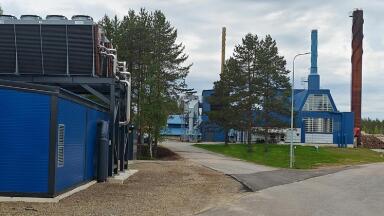
Neste has commissioned a new facility at its Porvoo refinery dedicated to upgrading liquefied waste plastic (LWP), marking a significant step forward for large-scale chemical recycling. The project represents an investment of €111 million and is currently the world’s largest facility of its kind, with the ability to process up to 150,000 tonnes of liquefied waste plastic annually. Operations are being gradually ramped up.
According to Jori Sahlsten, Executive Vice President of Oil Products at Neste, the successful commissioning demonstrates the company’s ability to process liquefied waste plastic on an industrial scale. He noted that the project reflects Neste’s expertise in developing advanced technologies, establishing safety standards and building new supply chains for challenging raw materials. Sahlsten also credited partners and employees for helping turn the concept into reality.
Neste has been processing liquefied waste plastic, including pyrolysis oil, since 2020. Construction of the new upgrading unit began in 2023 as part of the integration with the existing refinery infrastructure and was completed by the end of 2025. Production ramp-up started in 2026 and will continue gradually, depending on market conditions and regulatory developments.
The facility aims to bridge the quality gap between crude liquefied plastic waste and the high-grade feedstock required by the petrochemical sector. While mechanical recycling remains an important method for plastics recovery, it is often limited by the quality of collected waste streams. The new unit is designed to handle more complex materials such as multi-layer packaging, mixed plastic waste and contaminated plastics.
Maiju Helin, Director of Polymers and Chemicals at Neste, said the technology enables scaling up chemical recycling by upgrading plastic waste streams that are unsuitable for mechanical recycling and would otherwise end up in incineration or landfill. She added that current calculation rules under the EU’s Single‑Use Plastics Directive could limit refineries’ ability to contribute to recycled content targets. Helin argued that these rules should be updated within the context of the EU’s Packaging and Packaging Waste Regulation to support Europe’s competitiveness and circular economy goals.
At the facility, liquefied waste plastic is processed alongside crude oil. Neste uses a mass-balance method to allocate recycled raw materials used in production to its recycled Neste RE output. Using recycled Neste RE can reduce virgin fossil resource consumption by more than 70% and cut greenhouse gas emissions by over 35% compared with incinerating plastic waste and relying on fossil-based feedstocks in plastics manufacturing.
To further support plastics circularity, Neste is also working with Alterra and Technip Energies to license liquefaction technology designed to chemically recycle difficult-to-process plastic waste streams.
 Product directory











-from-Chesterton-House-Farm,-with-Giles-Russell-from-Midland-Slurry-Systems.jpg)

.jpg)

.jpg)
.jpg)