Green energy
Published over 5 years ago. See the latest and most current information on Green energy.
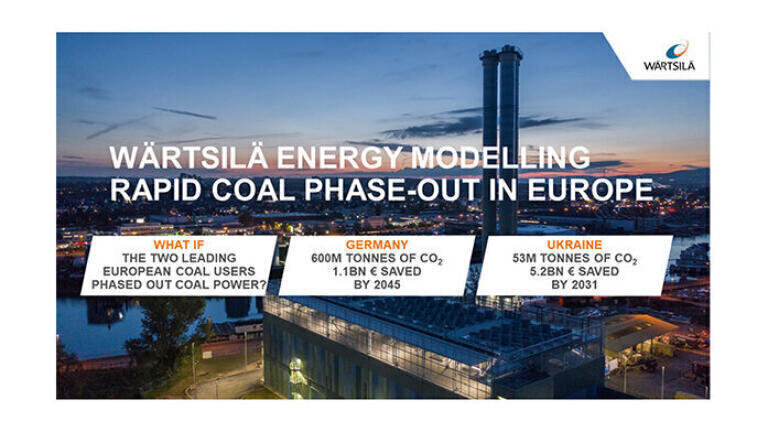
Wärtsilä has revealed that major system-wide benefits are in reach for European power producers that rapidly replace coal with renewable generation & flexibility: from avoiding fuel & carbon costs - to new clean power export opportunities.
Energy system modelling of Germany and Ukraine - two key European countries with vastly different power systems and policies to phase-out coal - shows that the coal capacity gap can be met cost optimally with renewable electricity coupled with flexible resources, i.e. flexible thermal power plants and energy storage.
“Our analysis from both sides of the coal exit spectrum is clear: value has been eroded from coal by low-cost renewable baseload. The coal phase-out presents myriad opportunities for European countries to cut production costs, achieve energy independence and create revenue through society-wide sector coupling. Flexibility is key to “levelling up” variable renewables to fulfil a baseload role to realise these benefits,” said Jan Andersson, Market Development Manager for Europe, Wärtsilä Energy.
Wärtsilä modelled a “Fast Phase-out 2030” scenario in which Germany eliminate coal-fired power by 2030 (eight years ahead of target) highlighting that the value of coal-fired power would be eroded by building 13 GW of new renewable capacity annually. Key insights for Germany include:
“In Germany, decisions taken in the next few months will determine whether they ramp up power imports (racking up cost and carbon) from neighbouring countries to fill the capacity gap, or pave the way to becoming a net exporter of clean power to the rest of Europe,” Jan Andersson added.
Wärtsilä modelled the outcome of a key decision Ukraine must make in coming months: whether to modernise or retire its coal - to meet its national emission reduction targets. Key insights for Ukraine include:
“Unlike Germany, Ukraine is not currently able to incentivise its coal exit, so it is vital that they find the lowest cost path to cleanly meeting power demand. Our modelling gives a clear outcome: modernisation of coal is far more costly than retirement and leaves the system more exposed to climate risk, whereas investments into renewables, plus battery energy storage and gas balancing, lead to system-level cost savings,” added Igor Petryk, Market Development Director, Wärtsilä Energy.
 Product directory














.jpg)