Green energy
Published over 11 years ago. See the latest and most current information on Green energy.
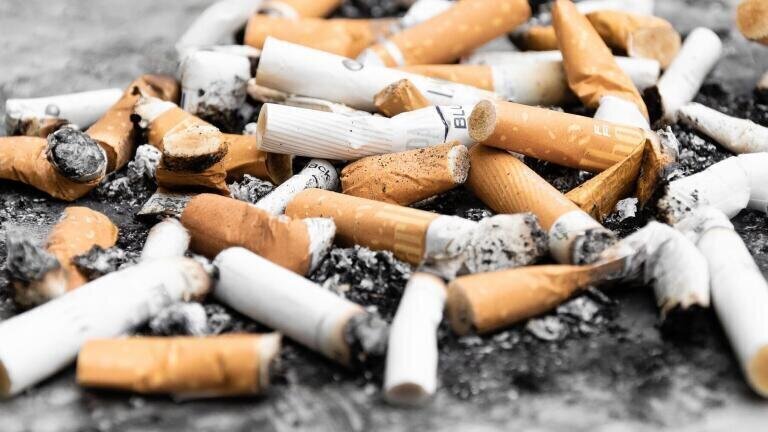
Cigarette butts are often tossed out of car windows or squashed beneath a shoe without a second thought. Their throw-away nature means they’re not an uncommon sight on pavements, in car parks and outside of bars and pubs. And while some of these are cleaned up by councils and business owners, many manage to make their way into our water streams and out into the environment, where they have the potential to cause a great deal of damage.
Estimations put the number of cigarette butts discarded into the environment at 5.6 trillion across the globe. That’s an awful lot of waste. And as they are non-biodegradable the problem worsens year on year - threatening the earth’s ecosystems in the process. But thanks to a team of researchers at Seoul National University, cigarette butts are on the brink of new beginnings - turning unwanted waste into high performing energy storage.
The South Korean scientists found that the key component of a cigarette butt, known as cellulose acetate, can also be used to store energy very efficiently. By turning it into a carbon-based material via a one-step burning process known as pyrolysis, a cigarette butt can become a supercapacitive material. In simpler terms, that means it is capable of storing high amounts of electricity - surpassing substances that are currently used to coat the electrode of supercapacitors, such as graphite.
This high-performing material can be used in a broad range of electronics including computers, wind turbines and even smartphones. While carbon - the most commonly used substance in this field - is relatively low cost with high electrical conductivity and long term stability, the cellulose acetate found in cigarette butts could prove to be even better. Once burned, the resulting carbon based substance was found to be covered with tiny pores, which increases its surface area and therefore its performance within a supercapacitor.
Supercapacitors are useful when large amounts of power are needed in a short burst - for example in the fluctuating loads of laptops, in engine starts for tanks and submarines, and tram systems without overhead wires.
Researchers tested the material by attaching it to an electrode and seeing how quickly it would store electrolyte ions - an indicator of fast charging abilities - and the speed at which it releases them or discharges. Where cigarette butts are concerned, the future is looking powerful.
Is doesn’t end with cigarette butts. These days, all sorts of discounted by-products are becoming valid sources for energy. For example, did you know that you can charge your phone with sweat or power a city with pistachio shells?
 Product directory




















.jpg)