Waste management
CANNON has unveiled its revolutionary approach to recycling polyurethane (PU) and PU-glass fibre composites (GFRPs), marking a significant advancement in thermoset circularity. The process has been developed in close cooperation with PU processor MAP S.p.A. and the University of Bergamo, with co-funding from the Italian strategic plan for the EU recovery fund NextGenerationEU.
Named POSSIBLE, for “PrOduce SuStainabLE Industrial Bodies,” the project has laid the groundwork for PU and GFRPs end-of-life recycling and reuse. It successfully demonstrates that ground foam and granulated parts can be used as secondary reinforcement materials in new composite formulations.
Thermosets account for about 12% of global plastic production, exceeding 40 million tons per year. Of these, polyurethane foams alone represent roughly 17 million tons, or more than 42%. These materials are highly valued for their mechanical and thermal resistance, dimensional stability, and ability to incorporate reinforcing fibres. However, the very features that ensure durability — chemical cross-linking and fibre reinforcement — make traditional recycling extremely challenging.
Although scientific research has explored various chemical recycling routes, these solutions remain largely confined to laboratory scale and are often too slow, too costly, or incompatible with existing PU manufacturing processes. CANNON therefore chose to focus on a more direct and industrially viable approach: reintegrating pure or composite rigid PU waste through two complementary methods, both fully compatible with high-pressure processing systems.
“In the plastics industry, sustainability and end-of-life discussions have taken centre stage, especially for reinforced thermosets,” said Maurizio Corti, Corporate R&D Director at CANNON. “Rigid polyurethane foams and glass fibre reinforced polyurethane composites are essential materials for achieving energy efficiency targets in sectors such as automotive, construction, and technical equipment. Yet they remain among the most difficult materials to recycle. Their cross-linked structure guarantees stability and durability but makes remelting and reshaping impossible. Landfilling and incineration are still the most common end-of-life options, but these are becoming increasingly unacceptable from both regulatory and environmental perspectives.”
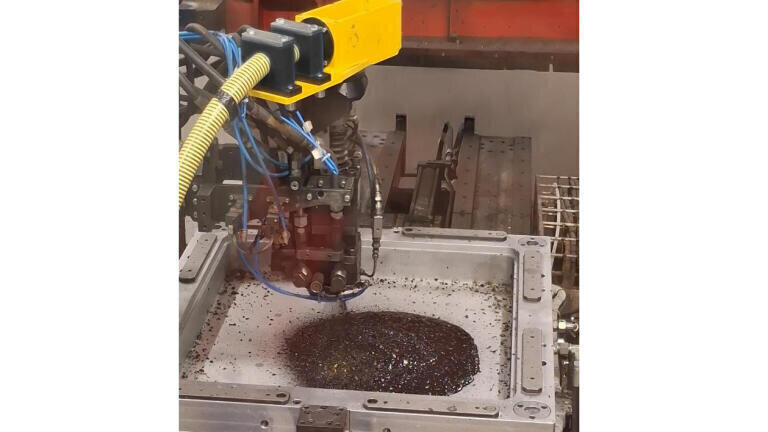
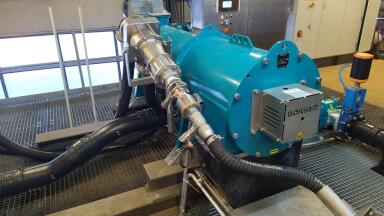
“It is within this context that the POSSIBLE project was conceived,” added Dario Pigliafreddo, Mobility and Specialties Sales Manager at CANNON. “The initiative provided a framework for targeted experimentation on the recycling of rigid polyurethane foams and PU/GFRP composites. Our goal was not to alter the chemistry of the system, introduce complex process steps, or require entirely new production lines. Instead, we applied the flexibility and modularity of a well-established glass fibre impregnation platform to incorporate recycled granulate and powder, adapting a high-pressure foaming system already in use by many PU manufacturers.”
During the project, two complementary approaches were explored. The first involved converting rigid foam waste into micrometric powders, which were dispersed into the polyol to form a slurry and then dosed as a liquid component via a mixing head. The second approach utilised rigid PU granulate, and polyurethane-glass fibre composite waste introduced as a solid filler and incorporated directly into new composite structures. Both methods enable the effective reuse of production scraps and end-of-life materials without disrupting established industrial processes.
By demonstrating that mechanically recycled rigid PU and GFRP waste can serve as functional secondary reinforcement, POSSIBLE represents a practical and scalable pathway toward thermoset circularity — helping the industry move closer to sustainable material management while preserving performance and process efficiency.




 Product directory











-from-Chesterton-House-Farm,-with-Giles-Russell-from-Midland-Slurry-Systems.jpg)