Air clean up
Published over 12 years ago. See the latest and most current information on Air clean up.
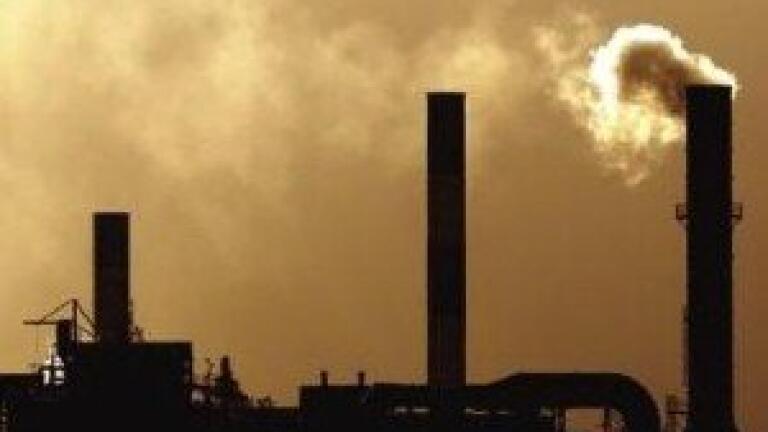
Think of a power station. What is the first image that comes to mind? For most of you it will be the flues - the big chimney stacks that characterise facilities at places such as Drax and Didcot. These funnels have a very important role to play in the function of a power station. As you already know, combustion of fossil fuels produces gas, and this gas needs to be released. This is done via the flues, which is why it is known as ‘flue gas’.
So what is flue gas, exactly? Most of us already know that carbon dioxide is part of its make-up - mainly due to its contribution to climate change. But this is just one small part of flue gas. We need to understand every ingredient, so we can invest in ways to remove pollutants and harmful gases.
The make-up of flue gas varies depending on what is being burned. Oil, coal and natural gas will all produce slightly different flue gases - although the fundamental ingredients are largely the same. Some of these - nitrogen, oxygen, carbon dioxide and water vapour - are not directly harmful to humans, although the impact on the environment is certainly clear. But flue gas also includes pollutants, which need to be removed before they exit the stack itself.
As we come to understand the impact of flue gas on the environment and our health, investment in ‘cleaning’ methods are on the increase. Before it exits the power station, flue gas is subjected to rigorous processes, including:
As you can see, there is a very rigorous process in place to protect the environment and the general population as much as possible from flue gas contaminants. And as time goes on, these methods will only get more sophisticated and efficient.
It is natural to be concerned about flue gas pollutants, which is why the power industry is continually investing in new desulphurisation technology. In fact, according to a new report from research and consulting firm GlobalData, the flue-gas desulphurisation (FGD) market will witness a varying level of growth over the coming years, increasing from $2.8 billion in 2012 to a peak of $4.3 billion by 2016, before reaching $3.7 billion by 2020. This article, Flue-Gas Desulphurisation Market to Witness Fluctuating Growth by 2020, looks at this report and its findings further.
Perhaps one of the most exciting and important developments is ‘carbon capture’ - designed to literally capture carbon dioxide from flue gas to prevent the adverse effect on the environment. There is already some carbon capture in place at energy plants, but the science is still in its infancy. With the help of big-budget research projects, it may not be long before flue gas is virtually carbon-free. The future for the ‘cleansing’ of flue gas is certainly exciting.


 Product directory

















_shutterstock_2296088597.jpg)