Air clean up
Published over 14 years ago. See the latest and most current information on Air clean up.
Researchers from Leicester are set to monitor air quality at the London Olympics in an effort to spark local councils into action over air pollution.
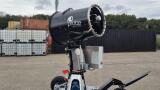
Using monitors set high above the streets, the City Scan project will monitor air quality using radar equipment that will sweep the capital. The increase in traffic during the event will provide the perfect opportunity to provide damaging statistics to local governance authorities, which is hoped to prompt them into action to tackle pollution in the capital.
Team leader Dr Roland Leigh, of the university's Earth Observation Science Group, said: "We will be able to map the pollution in 3D to show how low and how high toxic nitrogen dioxide and other fumes go and how far they spread."
Nitrogen dioxide is known to cause serious respiratory problems for vulnerable people, and has been linked with several health problems. As people become better informed of this, as well as escalating pollution problems, they become more active in pushing political leaders to take action on the problem.
Official monitoring stations in London have recently shown that particles, nitrogen dioxide, sulphur dioxide and other pollutants have reached the highest levels since the new, more stringent devices were introduced in 2008. This is worrying considering the amount of additional traffic that will be created by the Olympics.
Posted by Lauren Steadman


 Product directory















_shutterstock_2296088597.jpg)