Water/Wastewater
Published over 15 years ago. See the latest and most current information on Water/Wastewater.
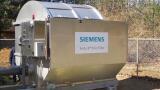
The city of Wroclaw, Poland, will be installing a thermal drying system from Siemens Water Technologies (Germany) at its wastewater treatment plant (WWTP) that serves approximately 1 million people in the metropolitan area. Comprised of four Ecoflash thin layer dryer lines, the 10 tons/hr evaporation capacity drying system will reduce the city’s daily biosolids volume from 320 tons/d to 109tons/d. The dryers will become operational in 2011.
Poland produces approximately 1 million tons of biosolids per year – a little more than a third of which is municipal. Almost half of that is currently sent to landfill. With both biosolids volume and landfill costs expected to increase significantly over the next few years, alternative disposal methods such as incineration and drying are becoming of growing interest.
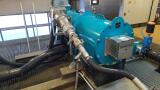
The Siemens Ecoflash thin layer is designed to dry biodolids using either diathermic oil or saturated steam. Inside the drying chamber, a rotor equipped with adjustable pitch blades operates at high speed. The wet biosolids are fed into the drying chamber by a dosing unit (metering pump) and centrifuged by the rotor, into a thin film layer, on the drying chamber wall. The blades of the rotor move the biosolids through the process in a dynamic and turbulent action, creating an energy-efficient evaporation process. A counter current of air removes the evaporated water from the dryer and helps cool the dried biosolids prior to them being discharged.
The Siemens’ thermal drying system was selected because of the technology’s high reliability and safety, small footprint, low maintenance and minimal operator attention required. Additionally, integrated energy recovery makes the thermal energy requirement particularly low. Other advantages include high energy efficiency; minimal environmental impact; short product retention time and agriculture-grade pathogen reduction.
 Product directory












.jpg)
.jpg)