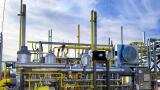
Infrared (IR) gas finder cameras are increasingly used in leak detection and repair (LDAR) surveys for detecting fugitive volatile organic compound (VOCs) emissions from process components. In order to use the camera for identifying leaking process components which have to be repaired, it is important to:
(1) operate the camera under conditions in which the IR camera's detection limit is expected to be lower than LDAR's repair thresholds;
(2) use the camera for determining whether a leaking inaccessible or remote process component exceeds its repair threshold.
In the present study, a laboratory facility was developed and used for determining the IR camera's detection limit as a function of multiple operating conditions, namely wind speed, viewing distance, and temperature difference between background and gas cloud. Operational boundaries were derived from the laboratory data for six different process components to ensure that the IR camera's detection limit is lower than the repair thresholds in LDAR. For determining whether a leak is inaccessible or the remote process component exceeds its repair threshold, an emission model was developed and validated with field data obtained in The Netherlands.
 Product directory





.jpg)