Water/Wastewater
Published over 15 years ago. See the latest and most current information on Water/Wastewater.
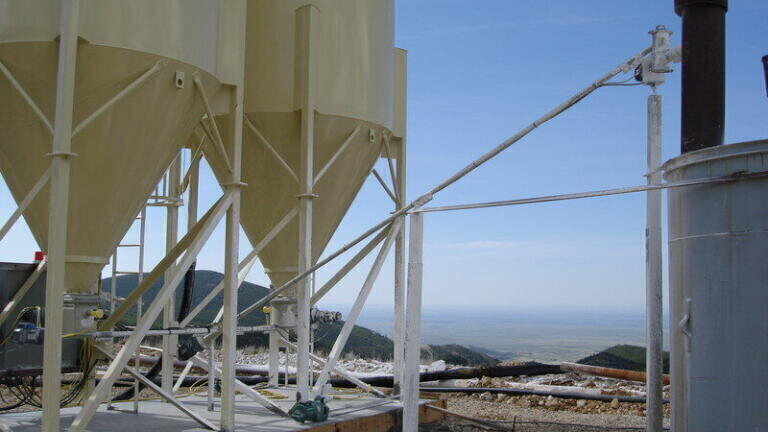
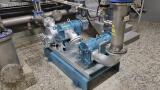
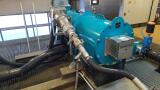
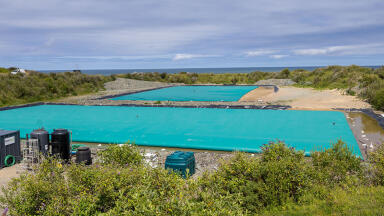
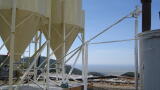
Sodimate (USA) has provided a complete lime storage and handling system for the pH regulation of an old gold/silver mine ponds in MT. The system is composed of two silos, each equipped with the unique sodimate mechanical discharger that prevent from bringing, arching or rat holing. The Mechanical discharger or arch breaker is the only alternative to bin activators (compaction and bridging) or air injection systems (fluidisation and rat holing). It is composed of flexible blades mounted on a central shaft. When the motor driven shaft rotates, the flexible blades agitate the lime into the silo cone preventing compaction and bridging. The silo dischargers are C/w independent shaftless volumetric screw feeders that are connected to one inclined conveyor.
Three silo level detectors (high, medium, low) monitor the amount of lime within the silo. When both silos are full and one of the medium levels is reached then the operation is alternated to the fullest silo in order to reduce the time the lime will remain into the silos. This is system could be considered as a, duty, stand-by method for emptying and refill. The inclined conveyor feeds into a lime slurry tank for a lime slurry concentration of 15%.
Over the months the equipment has proven its reliability and efficiency in the Montana harsh weather and improve the pH regulation of the water ponds prior being release to the downstream rivers.
 Product directory













.jpg)
.jpg)