Waste management
Prisons will only close the gap on their recycling targets when they can see what is in their waste, where it comes from and where its value is being lost.
That is the message from The Green Block, following HMPPS's latest annual report, which shows prisons falling short of both their recycling and waste reduction targets.
HMPPS's 2025-26 Annual Report and Accounts, published this week, shows prisons recycled or reused 57% of their waste against a 70% target, and cut overall waste by just 1% from the 2017-18 baseline, against a 15% target. Only 3% went to landfill, comfortably inside the under-5% target.
For Adam Williams, Managing Director of The Green Block, the figures point to one underlying issue: visibility. “Prisons have proved they can keep waste out of landfill. The next step is recovering its value,” he said. “You can’t improve what you can’t see. It is not possible to close a 13-point recycling gap with more bins or change of contractor. You close it by processing waste at its point of production and measuring every stage from thereon in.”
Few environments in the public estate are as closely monitored as a prison. Every movement is logged and every vehicle at the gate is searched. Waste is the exception. Bins are filled; contractors empty them and the material leaves site. It is believed that what happens next is rarely examined. And whilst around two-fifths of prison waste is avoiding landfill it is not being recycled or reused which means a lost revenue stream that improved data would bring into view.
The biggest challenge is not collection; it is visibility. Most contracts measure tonnes collected with a handful of service-level indicators. That says a lot about the contractor and very little about the prison. It rarely shows which wings, kitchens or workshops generate the most residual waste, where contamination is undermining recycling, or which interventions have made a measurable difference.
Without that evidence, a 1% reduction over eight years is no surprise. You cannot reduce what you cannot see.
A single prison can include residential wings, kitchens, workshops, healthcare, education and visits halls, each with a different waste profile. There is also a continuous churn of people meaning messaging has to be communicated repeatedly. Security compliance also adds an additional layer of bureaucracy which needs navigating.
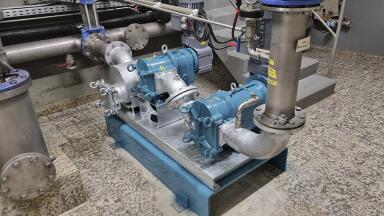
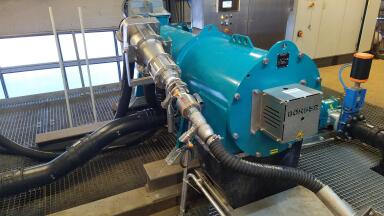
This is where The Green Block rescripts the approach. Its globally patented Mobile Segregation Unit (MSU), a mobile material recovery facility, processes mixed waste on site, removing the need for off-site hauling and reprocessing. In a prison, that also means fewer loads through the gate.
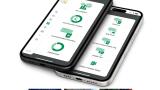
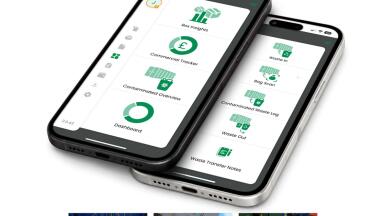
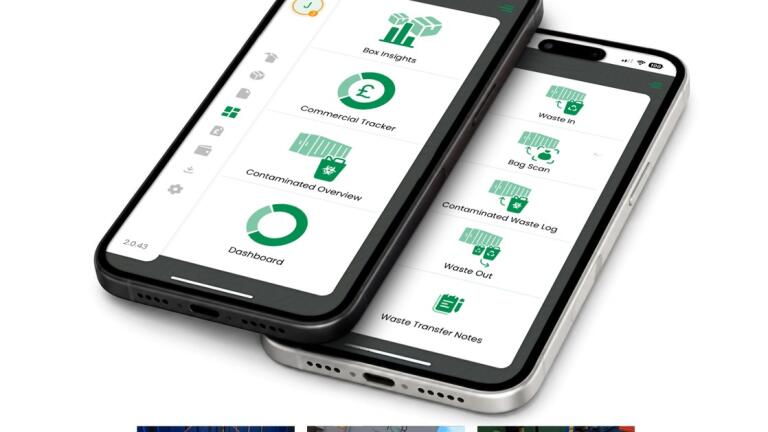
The MSU enables recycling rates exceeding 90%, achieves zero waste to landfill and virtually eradicates contamination, capturing real-time, auditable data at every stage. Plaza, The Green Block's proprietary digital platform, provides tracking, compliance reporting and granular insight into waste flows. Its QR-coded Pay As You Throw system makes waste traceable to individual wings, workshops or teams, driving behavioural change on the ground. That visibility is what turns a missed target into a clear route to meeting it.
Crucially this concept is not new – it’s one that is proven and paying significant dividends.
The Green Block already delivers this approach across some of Britain's most demanding environments, including major London railway stations, Birmingham Airport, London Stansted Airport, NHS environments and major retail and leisure destinations. Across its operations, it has helped transform recycling performance from approximately 11% to an average of 91.3%, alongside significant reductions in vehicle movements and associated carbon emissions.
From good practice to legal expectation
Regulation is moving the same way. Since 31 March 2025, Simpler Recycling has required workplaces in England to separate food waste, dry recyclables and residual waste. Since 1 October 2026, permitted waste receiving sites in England and Wales have had to record waste digitally, with carriers, brokers and dealers to follow from October 2027. Establishments will increasingly need to show not just that waste is managed, but how performance is improving.
A window for change
With recycling pilots expanding in 2026-27 and new facilities management contracts being procured, decisions taken now will shape prison waste performance for years to come.
Waste is no longer an afterthought. It is a performance metric, a compliance imperative and, crucially, a commercial opportunity. For a prison service committed to net zero and responsible use of public money, the data to manage it is quickly becoming essential.
 Product directory