Water/Wastewater
Published over 8 years ago. See the latest and most current information on Water/Wastewater.
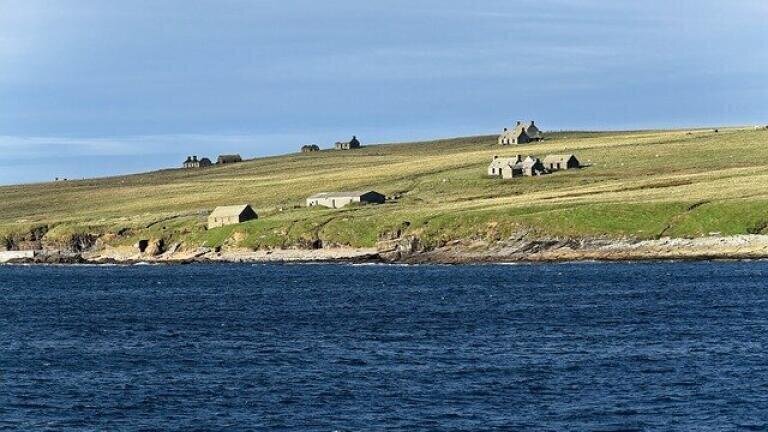
Picturesque, mystical and completely serene – the Orkney islands aren’t the kind of place you would normally associate with pollution headlines. A recent study, however, has uncovered abnormally high levels of microplastics around the islands. Read on as we look at the study in question, and how the islands have become this polluted.
With less than 22,000 people across nearly a thousand square kilometres, the Orkneys have gained a reputation as one of Britain’s best natural environments. And that will be confirmed by anyone who has visited the 70 islands – 20 inhabited – to the north of the mainland UK. As a whole, Orkney has 36 Sites of Special Scientific Interest, 13 wildlife-rich Special Protected Areas protected by Scottish Natural Heritage and 13 RSPB reserves.
This nature-rich environment may be threatened, however, by pollution levels found in a recent study. Researcher’s from Edinburgh’s Heriot-Watt University assessed over a hundred sample sediments from 13 beaches across the two largest Orkney Islands – Mainland and Hoy.
They found, despite the remote location and tiny population, that all samples contained microplastics. Their results even suggest the islands’ beaches may be as polluted as Scotland’s industrialised areas, such as Clyde and the Firth of Forth.
Microplastics are tiny plastic particles, measuring less than 5mm in diameter. They’re broken down into different categories:
However, as mentioned, the Orkneys wouldn’t be expected to fall victim to any of these sources with such a small population. So, how did the microplastics make their way to the islands? Researchers at Heriot-Watt University suggest tidal flows may explain the findings.
Complex tidal flows are thought to carry microplastics from more populated areas, up through the Pentland Firth, which separates the islands from mainland Scotland. Researchers recommend that more research is undertaken to create a “baseline microplastic database”, allowing for evaluation to shape future policies.
One of the ways in which water sources become polluted is through flooding. Coastal waters, lakes and reservoirs draw in a range of pollutants when they become flooded, which can seriously affect aquatic animals and flora. ‘The best way to clean up flooded lakes and reservoirs’ takes a closer look at the problem, and how it can be remedied without expensive chemical treatments.
 Product directory


























.jpg)

.jpg)