Water/Wastewater
Published over 13 years ago. See the latest and most current information on Water/Wastewater.
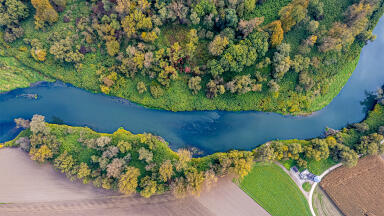
A new study in China has confirmed the existence of 'cancer villages' along certain rivers that have been linked to levels of water pollution. Areas along the Huaihe River have been found to have rates of cancer that are dramatically higher than the national average, according to Yang Gonghuan, the former deputy director of the Chinese Centre for Disease Control and Prevention.
Water surveillance data has been used in the new study, which looked at correlations between the data collected since the 1980s and the cancer rates of the region around the Huaihe River from 1970 to 2005. It was found that in the area affected by water pollution, the cancer rate was around 50 per cent higher than the national average between 2004 and 2005.
Economic development has been seen in three areas that the river flows through since the 1980s. The Anhui, Henan and Jiangsu provinces have all grown over the last few decades, resulting in an increase in the number of factories present in each province. Unfortunately, the growth of paper, plastic goods and leather manufacturing factories has also lowered the water quality throughout these areas. According to Ms Yang, the level of water pollution is made worse by the poor pollution control that is in place in many of the factories.
It is the pollutants being released from these factories that could be causing the cancer epidemic throughout these regions, according to Ms Yang. Whilst the fact that many of the areas that had relatively low rates of cancer throughout the 1970s now have high rates may suggest a strong link between cancer and water pollution, Ms Yang stated that more research is needed to identify the exact cancer-causing pollutants.
This further research could also prove conclusively that it is in fact the water pollution that is the primary cause of the cancer affecting many people in the provinces. If the link is conclusively proven, it could force the Chinese government to begin clean-up operations and place stricter policies on water pollution prevention for industry.

 Product directory