Wastewater treatment
Published over 14 years ago. See the latest and most current information on Wastewater treatment.
Carbon Fibre is a "fibrous carbon substance having a fine graphite crystal structure", which is manufactured by carbonising acryl fibres by a special heat treatment process – Polyacrylonitrile (PAN). The Carbon Fibre consists of clusters (bundles) of 12,000 ultra-fine, 7μm thin filaments. Carbon Fibres used for water purification are given a special surface treatment to make the fibres expand in water. The industry standard for Carbon Fibres uses an epoxy treatment, which makes the fibres not suitable for water treatment.
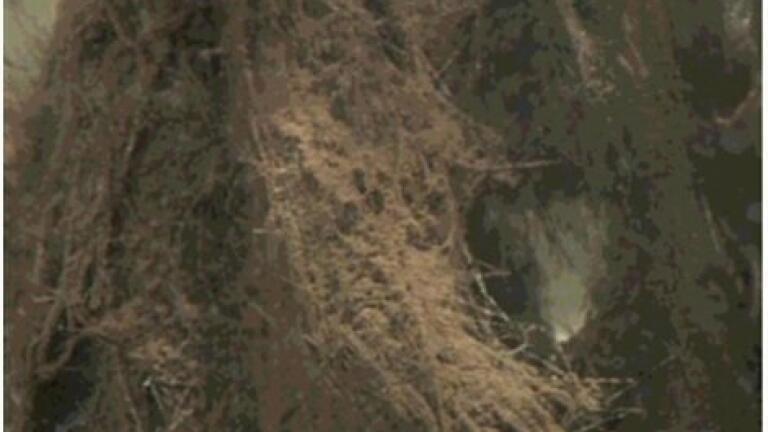
When immersed in water, a water-soluble sizing agent dissolves, and the filaments unravel and spread. Pollutants in water are adsorbed on the large surface area of the carbon fibres. At the same time, microorganisms or bacteria in the water are attracted and fixed to the filaments. Due to their high biocompatibility, the carbon fibres form an active microorganism film and become a habitat for the microorganisms. The microbial film sways in the water, capturing and decomposing pollutants. Effects include water purification, preservation of the ecosystem, and securing biodiversity.
Compared with the typical Activated Sludge process the reactor has designated areas for either primarily aerobic or anaerobic activity, whilst in the MiraCarbon (South Africa) case both processes are supported in each filament cluster.
The typical and preferable design is of “cluster” type. This cluster type Carbon Fibre has an effective surface area of 0.5m2/g. One of the cluster type products in fig. # above is approx 650 x 400 mm, weighs only 20 g but provides 10 m2 of surface area.
The woven version has 1/5 of the surface area compared to the cluster type – 100 g provides same 10 m2 of surface area. This design is suitable for more physically demanding environments such as Active Sludge Reactors.
The addition of MiraCarbon can enhance the capacity/efficiency of an activated sludge process with 2-300%. The addition of MiraCarbon can enhance the capacity/efficiency of a maturation pond 5-10 times. Rehabilitation/extension of Activated Sludge processes based works typically cost: £ 1.0 million/Ml. Enhancement of Activated Sludge processes or Maturation Ponds using MiraCarbon: £ 0.1-0.3 million/Ml.
 Product directory











.jpg)
.jpg)