Green energy
Published over 10 years ago. See the latest and most current information on Green energy.
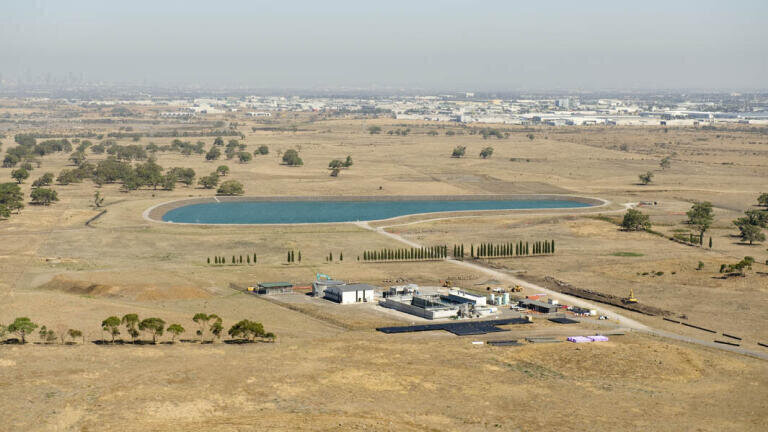
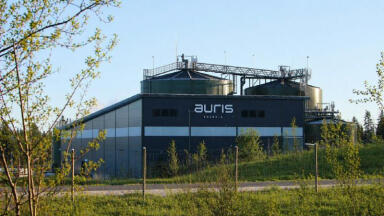
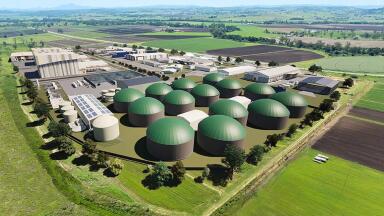
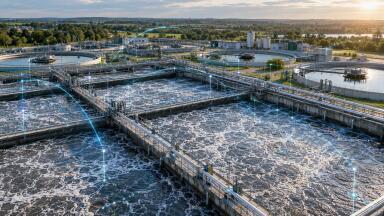
On October 19th, 2015, the ground was broken for one of Australia‘s most innovative biogas projects.
In the next 14 months, German biogas plant manufacturer WELTEC BIOPOWER and its project partner
Aquatec Maxcon will establish a biogas plant in a Melbourne suburb. The 1 MW plant for the anaerobic
digestion of organic waste will be one of the first of its kind Down Under.
The customer Yarra Valley Water is one of Australia‘s largest enterprises providing water supply and
sewerage services. Through the biogas production, Yarra Valley Water will become energy self-sufficient
at the plant location in Aurora: “The purpose built Waste to Energy facility will provide an environmentally
sustainable solution for commercial organic wastes, generating enough renewable energy to run the
existing sewage and recycled water treatment plants, as well as other Yarra Valley Water facilities”, says
Pat McCafferty, Managing Director of Yarra Valley Water. The two 530 kilowatt MAN engines are even
producing as much electricity that an unused surplus can be fed into the public grid.
In view of the positive effects of this anaerobic digestion project, other investors Down Under are likely
to follow suit. Currently, the population and politicians are debating what the correct energy mix of
tomorrow should look like. The debate also includes the subject of nature conservation. The population
is sensitive to this subject due to Australia‘s environmental impact as the world‘s third-largest uranium
exporter and one of the world‘s highest per-capita carbon emissions resulting from the primarily coalbased
power production.
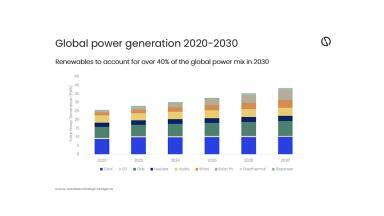
In fact, the transition towards renewable energies has already started: By 2020, the production from
renewable energies is to reach 33 TWh. The few biogas plants that are currently online in Australia
still mainly utilise sewage sludge and wastewater from various industries. The growth of the biogas
segment could be boosted especially by making more consistent use of biowaste, such as will be used
at the WELTEC plant in Aurora. Meanwhile, organic leftovers are regarded as raw materials and valuable
energy sources.
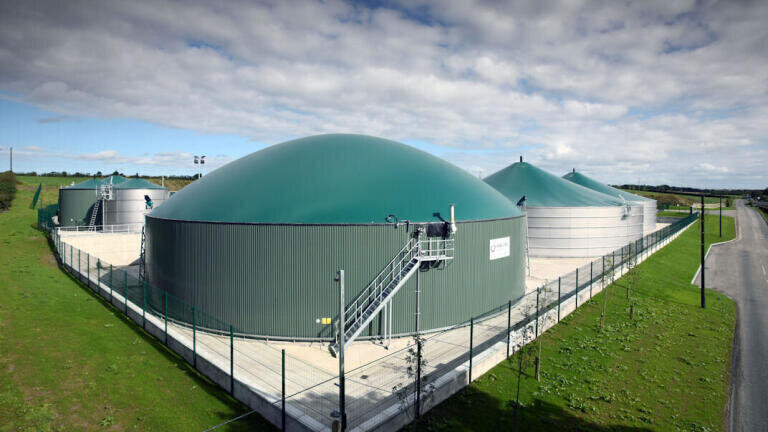
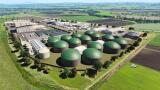
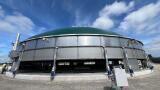
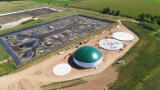
The two stainless-steel digesters in Aurora, each of which has a capacity of 3,573m³, will be fed with 100
tons of organic waste a day. More than half of this amount will come from cafeterias and restaurants. The
rest will comprise fats and oils, brewery and dairy leftovers, fruit and vegetable waste and sludge that
will be pumped from the adjacent wastewater treatment plant. After the digestion process, the substrate
will first be sanitised and then buffered in a stainless-steel tank of 4,531m³.
A custom-tailored input process will be set up to ensure uninterrupted supply of the biogas plant. At the
delivery area, the feed stocks will first be loaded into two 35m³ solids hopper feeder. Part of the substrates, such as melon peels, will first be shredded and then further chopped up with other raw materials and mixed with recirculation fluid in the MULTIMix system. After this preliminary treatment, the mixture will be pumped into the largest of the five stainless-steel pre-storage tanks with a total volume of almost 700m³.
Except for the loading of the input systems, the process is fully automated. The size of the pre-storage
tanks was designed in such a way that no loading and thus no manpower will be required at the weekend
and at night. WELTEC‘s custom-developed LoMOS PLC will make sure that the substrate is automatically pumped from the pre-storage tanks to the digesters, thereby ensuring continuous digestion at the weekend.
“Our knowledge and experience in rolling out the technology of such a project was a key factor in our
selection as the first German biogas plant manufacturer to build a plant in Australia. We are proud of
being represented on five continents with about 300 biogas plants“, summarises Jens Albartus, Director
of WELTEC BIOPOWER, the company‘s achievements. The thorough planning that preceded the project
is reflected in the two-year preparation phase prior to the commencement of the construction activities.
Jens Albartus is sure that it was worth the effort: “The efficient operation will help to establish a good
reputation of AD waste plants on the fifth continent.“
 Product directory








.jpg)