Business news
Seb Evans explains why now is the right time to get your 2026 diaries out and start booking out time to attend exhibitions.
The landscape of environmental monitoring is evolving at a breakneck pace.
As we move through 2026, the industry finds itself at a unique intersection.
We have more data than ever before.
Yet the challenges of interpreting that data, ensuring its accuracy and meeting increasingly stringent global regulations have never been more complex.
In this high-stakes environment, the temptation to rely solely on digital learning and virtual product launches is strong.
However, for the environmental professional, nothing replaces the tangible, multifaceted experience of a high-quality technical exhibition.
In conjunction with International Environmental Technology (IET), ILM Exhibitions continues to lead the way in 2026, providing the physical forums where theory meets practice.
Here, we explore why attending exhibitions remains the single most effective strategy for professional development and operational excellence in 2026.
One of the primary challenges in modern monitoring is “black box” syndrome.
This is the tendency to trust a digital readout without fully understanding the system behind it.
As highlighted in recent industry studies, roughly 80% of measurement failures in emissions monitoring are caused not by the analyser, but by the handling system.
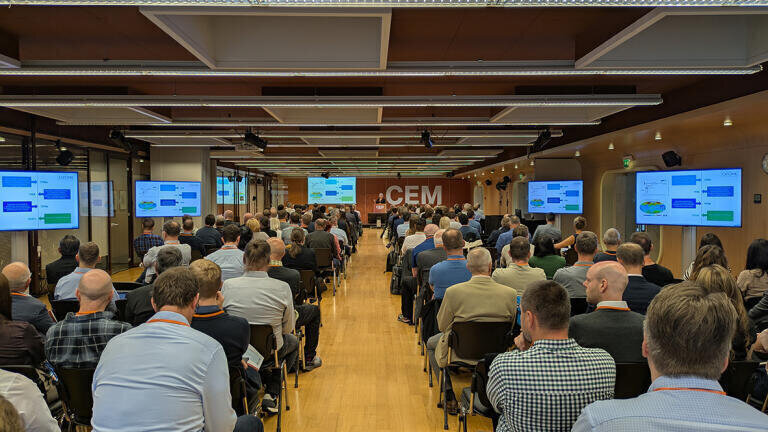
Exhibitions like CEM India (held in New Delhi from 10-12 March 2026) are designed specifically to dismantle this mentality.
These events highlight the practical benefits of CEMS (continuous emissions monitoring systems) and air quality monitors.
For environmental managers, seeing the physical layout of a sampling probe or a heated line in person is invaluable.
These meetings help users improve quality control and process optimisation. They offer direct access to the manufacturers who design the systems.
Attendees can overcome the hurdles of selecting the right technology and ensuring correct installation and calibration – details that are often lost in a digital brochure.
This year is pivotal for environmental policy. Many regions are reaching milestones for air and water quality targets set earlier in the decade.
Staying compliant requires more than just reading a summary of the law; it requires understanding over how that law is being enforced and what technologies the regulators are currently validating.
At events such as Aquamate India, co-located with CEM India in New Delhi (10–12 March 2026), professionals can interact directly with regulatory bodies.
Aquamate India serves as an essential in-person water and wastewater monitoring conference for those who need to utilise advanced instruments and automation solutions.
The technical program is specifically curated to update attendees on the latest trends, regulations and methods for testing water quality.
In an era where “forever chemicals” like PFAS and antibiotic-resistant bacteria are shifting the goalposts of wastewater treatment, having a face-to-face dialogue with experts is the fastest way to ensure your facility remains ahead of the curve.
Digital platforms are excellent for “targeted” searching. You can easily find exactly what you are looking for.
However, they are poor at “serendipitous” discovery.
At a physical exhibition, you might be walking toward a specific booth and find yourself stopped by a new sensor technology or a data-handling software.
It could solve a problem you didn’t even realise you had.
This is particularly true at large-scale regional hubs like CEM Asia, taking place in Kuala Lumpur, Malaysia, from 17-19 September 2026.
Held at the prestigious KLCC Convention Centre, this event benefits from its location as a crossroad for Asian industry.
Following on from successes since 1997 across Europe and the Middle East, CEM Asia offers solutions for everything from proper maintenance of CEM systems to advanced source apportionment.
Because CEM Asia is held alongside Aquamate Asia, visitors have the unique opportunity to discuss their air monitoring needs and water monitoring projects simultaneously.
This cross-pollination of ideas is a hallmark of ILM Exhibitions.
Air quality specialists might find a data-twinning solution at a water booth that is perfectly adaptable to their stack emissions workflow.
For a laboratory analyst or a process engineer, the “feel” of a piece of equipment matters.
How easy is it to swap a filter? How robust is the casing against corrosive industrial environments? How intuitive is the user interface?
At Aquamate Asia (17-19 November 2026 in Kuala Lumpur), these questions are answered through live demonstrations and lectures.
This in-person conference is a magnet for experts in instruments and process monitors.
Visitors are encouraged to discuss current and future monitoring projects with equipment suppliers and end-users who analyse water daily.
This real-time validation builds a level of trust in a technology that a pre-recorded video simply cannot replicate.
After years of remote work and digital-first communication, the “human” element of the environmental sector has never been more precious.
The environmental monitoring community is relatively small and highly specialised.
The relationships formed during a coffee break in New Delhi or a roundtable discussion in Kuala Lumpur often result in multi-year collaborations.
As well as career-long mentorships.
Exhibitions are the primary engine for this “social capital.”
They provide a neutral ground where competitors can discuss industry-wide challenges.
And where young engineers can meet the experts who have been calibrating sensors for decades.
In 2026, the most successful environmental professionals are those who step out of the office and into the exhibition hall.
By witnessing technology in action and engaging in the high-level technical programs offered by ILM Exhibitions, you ensure that your data is not just a collection of numbers, but a defensible, accurate foundation for environmental protection.
 Product directory