Wastewater treatment
Published over 15 years ago. See the latest and most current information on Wastewater treatment.
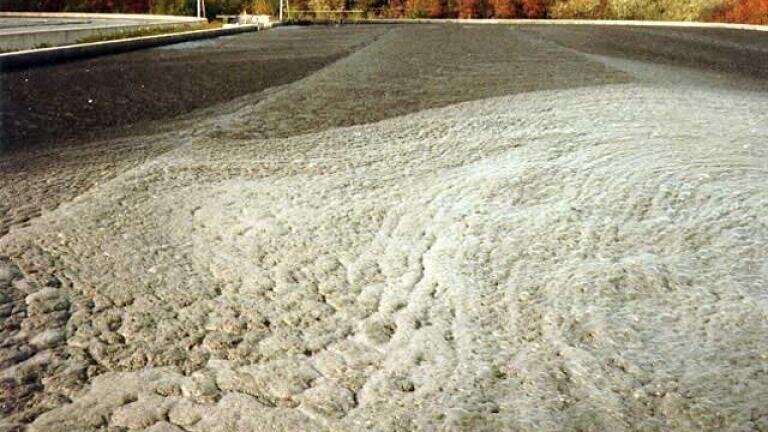
The mechanism of many foam control products is to add hydrocarbon or silicone oils that are hydrophobic. These products work with surfactant induced foams and polysaccharide induced foams caused by nutrient deficiency. However, foaming due to Nocardia-form and Microthrix filaments are quite different in nature and require a defoamer that is chemically different. These filaments are hydrophobic and are typically present when high FOG concentrations and/or fatty acids are present at significant concentrations. Hydrocarbon and silicone oils can actually make the problem worse.
QM Environmental Services (The Netherlands) offers several products that can be used to combat these filament induced foam types.
MICROCAT-DF is a glycol based defoamer optimized for this type of microbial foam. The defoamer helps to break-up the tangled filament mass in the foam and disperse the filaments to accelerate washout. If a slug of MICROCAT-DF is added to a well mixed area of the aeration basin or the RAS, the foam can be knocked down in minutes. If it is metered in at the low dosages required for control, it may take one hydraulic retention time to dissipate foam over the aeration basin. MICROCAT-DF also works in both aerobic and anaerobic digesters where foaming is caused by filaments (usually over-growing in the mixed liquor of the aeration basin).
MICROCAT-DNTRF is a fat, oil and grease degrading bioformula that can be used to quickly degrade FOG and fatty acids on which the Nocardia-form and Microthrix filaments grow. By effectively reducing the FOG concentration the filaments have less food to grow on and will be reduced in their concentration which results in the disappearance of the foam. This generally will take a bit more time than when using MICROCAT-DF but on will have a more lasting effect. Both MICROCAT-DNTRF and MICROCAT-DF can be used together to have a direct foam removal and a long term solution.
MICROCAT-XF is formulated to reduce filamentous microbe populations, improve sludge settling and reduce effluent suspended solids. When used on a preventive maintenance basis, this product can enhance overall system performance while reducing operating costs. MICROCAT-XF contains a combination of aerobic and facultative anaerobic microorganisms selected from nature for their ability to break down a broad range of substances encountered in domestic and food processing wastes. It also contains enzymes and other ingredients selected to destabilize the protein sheath protecting many filamentous forms. Reducing the filament concentration will reduce the foaming. Both MICROCAT-XF and MICROCAT-DF can be used together to have a direct foam removal and a long term solution.
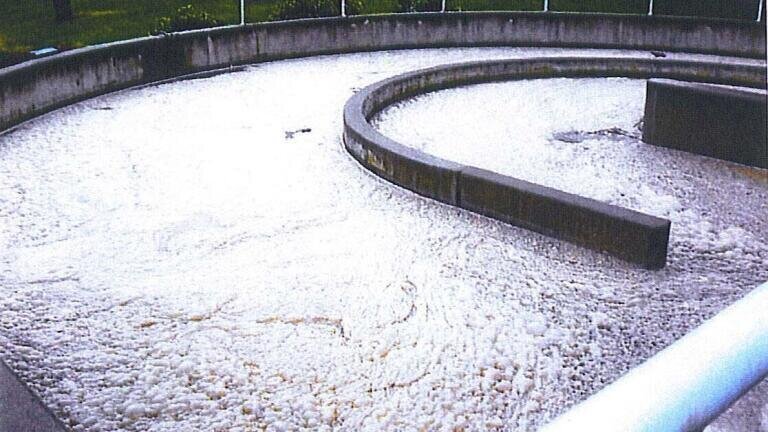
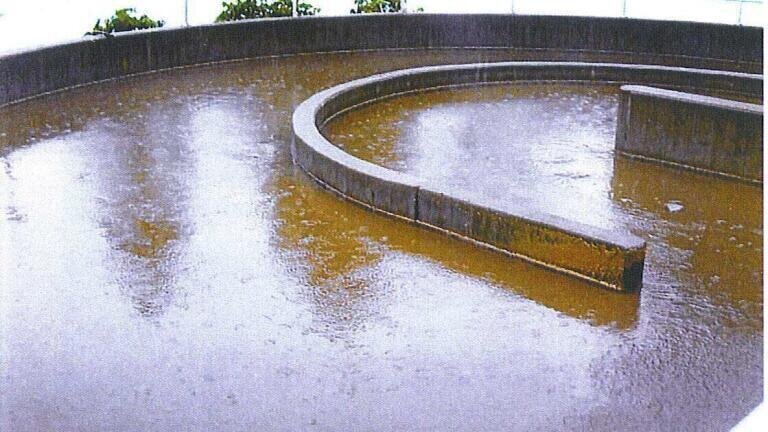
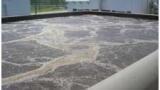
Case Study A municipal waste treatment plant, with a flow of 1315 m3/day, was receiving excessive FOG in the influent wastewater and experienced foaming in the aeration ditch. A daily application of 0,9 kg per day MICROCAT-DNTRF is made directly into the aerated portion of the oxidation ditch system.
MICROCAT-DNTRF Fat, Oil and Grease Degrading Bioformula did an excellent job in reducing the foam and filaments, reestablishing a healthy biomass, increasing clarifier settling rates and reducing effluent TSS and BOD. Recent reports from other municipal wastewater treatment plants demonstrated that the use of MICROCAT-DNTRF could reduce foaming already after 2 days.
 Product directory











.jpg)
.jpg)