Waste management
Published over 14 years ago. See the latest and most current information on Waste management.
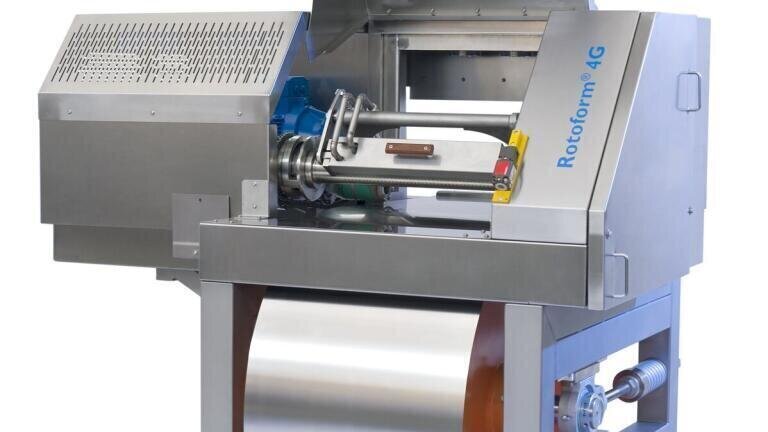
Sandvik Process Systems has used ACHEMA 2012 to launch its newly developed Rotoform 4G system, the latest generation of a system first introduced in 1980 and now widely recognised as the standard solution for granulating a wide range of chemical melts including sulphur, waxes, resins and agrochemicals.
Sandvik Process Systems have enhanced their new design by redesigning the refeed bar, simplifying operation and improving the product quality. A lifting device has also been added to streamline servicing along with new bearing units that reduce maintenance requirements.
The aim of the product has remained the same however; a one-step melt-to-solid granulation process that will deliver consistent particle sized, free-flowing, dust-free pastilles. Molten product is fed onto a continuously running steel belt in the form of droplets. These are solidified by means of cooling water sprayed against the underside of the belt. This indirect cooling is not only highly efficient but also means no risk of cross-contamination between product and cooling water.
"The 4G model is based on the proven Sandvik Rotoform process and represents a significant step forward compared with its predecessor, the RF3000," explains Matthias Kleinhans, Managing Director of Sandvik Process Systems. "The new system enables easier operation and also reduces the servicing and maintenance requirement. This means lower running costs and an attractive ROI."
This 4G model has been fitted with a pneumatic refeed bar that can be raised to the correct position with the ease of a button. Automatic positioning of the heated refeed bar ensures that any surplus material left on the depositor after the drops have been placed on the steel belt is forced back through a channel in the Rotoform. It is then remixed with the product and returned to the production process.
The bearing units are fitted with enhanced mechanical seals that improve reliability and reduce maintenance work. Instead of a standard chain drive, a low-maintenance toothed drive belt can be installed as an option. This further reduces servicing work as the belt no longer needs retensioning or lubricating, while replacement is also a quick and easy job at the end of the belt's lifetime.
The safety hood of the 4G model has been redesigned to ensure full enclosure of all hot and movable parts, ensuring maximum operator safety. The system only operates with the safety hood closed.
A significantly reduced "product dead zone" also ensures a lower maintenance requirement. The Rotoform unit can be cleaned quickly and easily, allowing fast, uncomplicated changeover to another product. The feedstock leaves no residues, so that the resulting end product is of a better quality. This provides considerable flexibility in the production process.
 Product directory













-from-Chesterton-House-Farm,-with-Giles-Russell-from-Midland-Slurry-Systems.jpg)



.jpg)
.jpg)