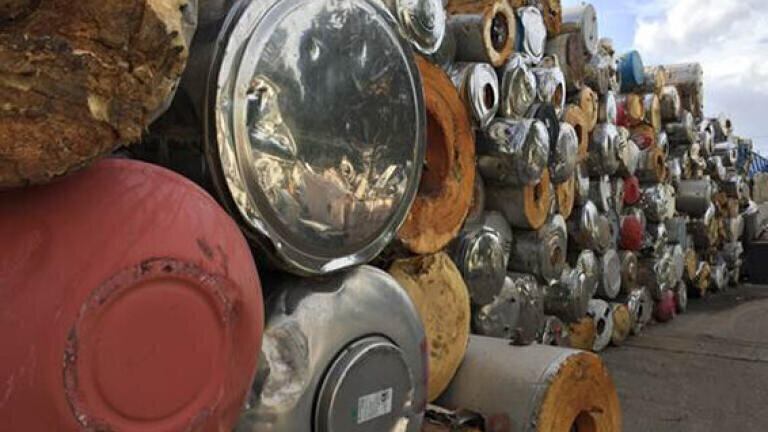
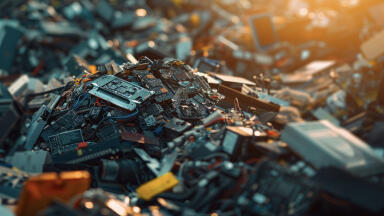
![Figure 2: Boilers and hot-water storage tanks containing CFC-blown insulation foams that have been collected for treatment [© RAL Gütegemeinschaft]](/assets/file_store/pr_files/53229/thumbnails/images/768w-432h-t-fit-Unknown-1.jpg)
Waste management
Published over 6 years ago. See the latest and most current information on Waste management.
A study by the environmental research organisation Öko-Institut e.V. was recently commissioned by the RAL Quality Assurance Association to evaluate the different treatment paths currently used for boilers and hot-water storage tanks (or storage water heaters as they are also known) containing CFC-blown or hydrocarbon-blown insulation foams. The recently published study highlights the fact that most boilers and hot-water storage tanks are simply shredded in a non-encapsulated car shredder, which means that the treatment process fails to meet statutory environmental standards.
The question of what constitutes proper treatment of end-of-life boilers has long been a matter of debate among waste management experts around the world. To ensure that future discussion of this matter can build on a reliable factual base, the RAL Quality Assurance Association commissioned the Öko-Institut e.V. to undertake a comprehensive assessment of current waste management practices in this area.
As part of their research, the team from the Öko-Institut gathered data from treatment companies on the sources, onward destinations, composition and quantities of boilers and hot-water storage tanks that were received for treatment. Of the many questions that the study sought to address, one of particular importance was determining the types of insulation materials contained in these appliances.
The results of the Öko-Institut study highlights the urgency of finding an environmentally sustainable and climate-compatible solution to this problem – not only in Germany but in all other European countries.
The authors highlight two core areas where it is essential to improve current treatment practices:
At present, boilers and hot-water storage tanks that are classified as waste electrical equipment are regarded as ‘large appliances’ and are separated for treatment in accordance with this classification. However, it would make more sense to treat these units in the specialized treatment plants that already exist for processing end-of-life refrigeration equipment and other so-called ‘temperature exchange equipment’. The fact that hardly any CFC-containing boilers and hot-water storage tanks are actually being treated in accordance with legal requirement has not only been demonstrated by the Öko-Institut in its study, it has also been confirmed to the RAL Quality Assurance Association by numerous European waste processing companies that operate recycling plants for end-of-life refrigeration and temperature exchange equipment, who have stated that they never or only very rarely receive boilers and hot-water storage tanks for treatment in their specialist plants.
 Product directory











-from-Chesterton-House-Farm,-with-Giles-Russell-from-Midland-Slurry-Systems.jpg)


.jpg)
.jpg)