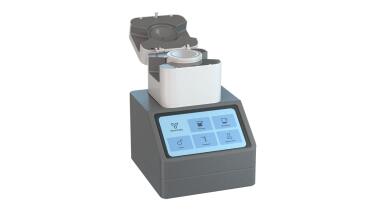
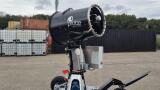
TOTAL and CNRS (1) through the AUSEA (2) project, developed a CO2 & CH4 sensor embarked on drone in the aim at measuring GHG (3) emissions of TOTAL's industrial operation. The sensor is a high-performance multi-gas spectrometer developed by GSMA (4) for monitoring of atmospheric concentration of GHG. Tough challenges are overcome to made it embarked on a drone: weight reduction, perturbation management, soil/air communication. For emission calculation, advanced algorithms have been developed with optimisation of flights and plume reconstruction.
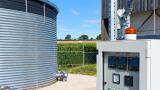
Sensor, algorithms and global system have been developed and validated thanks to field trials made on platform test TADI (5) of TOTAL in Lacq, south of France. Experimentations consist in controlled gas leaks of methane or CO2 with a large participation of research institutes, product manufacturers and innovative startups for testing / validation of various measurements systems: gas lidar, hyperspectral & multi spectral camera, acoustic sensors … . Two campaigns have been done with AUSEA project in 2017 and 2018. 2017 trials have been done with a 3 gases sensor (CH4, CO2, H2O) embarked on a tethered balloon moved 'manually' to make sure that the sensor was within the plume. Several ways of displacement have been evaluated in the aim at testing, developing quantification algorithms. In 2018, taking into account 2017 results, a low weight, two gases (CH4, CO2) system has been developed and embarked on a drone with an optimized way of displacement. Emission area was a punctual source in free field in 2017 and became multipoint and diffuse sources in an industrial representative environment in 2018.
Developments and results - performances and limitations, are discussed in this paper and perspectives of the project are presented.
Centre National de la Recherche Scientifique
Airborne Ultra-light Spectrometer for Environmental Applications
Green House Gases
Groupe de Spectrometrie Moleculaire et Atmospherique
Transverse Anomaly Detection Infrastructure
I studied thermic and fluid mechanics in the engineering school of Polytech’ Marseille. For my last year internship, I worked with Total on atmospheric dispersion reverse modeling. I used a lagrangian dispersion model to estimate the emission of a source with in situ measurements. I also started developing an algorithm of source localization using the same in situ-measurements. After graduating the CNRS1 offered me a thesis in the project AUSEA2. Through this project in collaboration with Total, we are developing an airborne ultra-light spectrometer measuring in situ methane and carbon dioxide concentrations. With the data gathered we develop advanced algorithms to reconstruct the plumes and quantify the emissions.
 Product directory






.jpg)