Green energy
Published over 13 years ago. See the latest and most current information on Green energy.
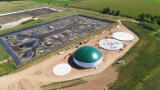
Weltec Biopower (Germany) biogas plant construction company from Vechta builds a biogas plant in Jeppo (Finland). The company from Lower Saxony is implementing this project jointly with its Finnish
project partner, Doranova.
As early of autumn 2013, the plant will produce biomethane refined to natural gas quality, which is suitable
for all consumption paths and as such also suitable as fuel for the growing network of Finnish natural gas
stations. The modular design of the plant allows for the realisation of the project within a short period of
time. In this, components constructed in-house such as the fermenter, pump and agitator technology are
put to use; as well as separation and sanitation technologies. They are operated via a control system which Weltec specifically developed for the optimal interaction of the components.
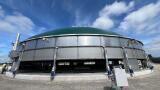
In the construction of the three 4,000 cubic meter sized fermenters and the two receiver containers, Weltec counted on the tried and tested, e.g. the material being stainless steel. The stainless steel cladding considerably contributes to the quick and safe completion of the plant. With this system, Weltec can guarantee the same high-quality container characteristics world-wide. For the high degree of automation and the precise plant control, the German plant construction company relies on its experience from the construction of the industrial biomethane refineries in Könnern and Arneburg, which were visited by the Finnish investors and operators in advance.
The plant construction company integrated an in-house innovation for the feeding of substrate – the
MULTIMix: with this, fibrous input materials such as grass silage, straw or co-substrate are disintegrated.
This way, these normally difficult-to-process substrates can be decomposed excellently into biogas by the
bacteria. Similarly, there is the option for a foreign body separation upstream of the pump and stirring
systems of the plant. In this fashion, the new feeding system reduces the stress on the stirring system as well as the wear of the Finnish plant. Furthermore, the plant operator will, in the future, also be able to flexibly choose input materials and can rely on cheap, but difficult-to-process substrates.
This advantage was decisive since, in the future, additionally fox and mink excrements from a nearby fur farm are going to be processed. In the initial phase, only wastewater, grass and straw will be used as fermentation substrates. Additionally, manure from a total of three pig sties of a business located a few kilometres away will enter the fermenters via pipelines.
A coordinated manure and fertiliser management assures that after the completion of the fermentation
process on the one hand sufficient high quality fertiliser for the farmers of the region is available and will
contribute to the nutritional supply of the surrounding fields. On the other hand, the statutory nitrogen
limits in the region are adhered to so that the ground water is not overburdened with nitrate.
In energy production, the Finns have to increasingly count on their own resources in order to decrease
their dependency on the import of energy carriers. There is a need for this since the trade deficit in 2011
increased by 40 percent compared to the previous year. In comparison to its neighbour, Norway, which is
almost completely taking care of its supply via water power generation and can export its raw materials,
the Finns do not have access to any substantial oil, gas or coal reserves.
Aside of a strong expansion of nuclear power, Finland is therefore most strongly counting on biomass
among the renewable energies. The preferred form of utilisation is based quite considerably on the
enormous supply of wood in the forest-rich country as well as the sufficiently large deposits of peat and
the volume of refuse. This biomass richness ensured that in Finland in 2011 the power generation from
wood biomass (22 percent) even exceeded that of nuclear power (17 percent). By comparison: only approx. three percent were generated by water power und only 0.1 percent by wind power. Photovoltaics play next to no role at all in Finland.
Biogas plants are to be expanded, especially in the area of the waste industry. According to the Association for Foreign Trade, a total of more than 30 biogas plants are in concrete planning in Finland. In this, Weltec Biopower, the plant construction company from Lower Saxony, can particularly shine through its numerous references from 24 countries, among them the existing waste biogas plants in Finland, as
well as its special technologies in the area of waste utilisation. This also was the decisive issue for the
Finnish customer to decide for a biogas plant by Weltec Biopower.

 Product directory