Air clean up
Published over 14 years ago. See the latest and most current information on Air clean up.
DONG Energy has set itself ambitious objectives not only for its further business development but also in the area of climate and environmental protection. DONG intends to significantly reduce the emission of nitrogen oxide in its power stations for each generated kilowatt-hour.
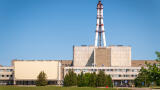
In order to meet DONG’s environmental objectives, the company has cooperated with Johnson Matthey Catalysts (Germany) GmbH producer of technical ceramics since 2009. Johnson Matthey provide SINOx® plate catalyst for the Power Stations 3 and 4 of Studstrupværket, one of ten central power stations operated by the Danish energy provider. The catalyst reduces nitrogen oxide in the power station’s exhaust air. The power plants are fuelled 90 percent with coal and about 10 percent with biomass. Each unit generates up to 350 MW electricity and additionally provides heat to most of the citizens of the city of Aarhus and the surrounding region.
Johnson Matthey Catalysts provides plate catalyst for Studstrupværket Power Stations, which were built in the mid 80’s and expanded at the end of the 90’s. The technical performance and the price/performance ratio of the Johnson Matthey product convinced the power plant operator to replace 380 cubic meters of older catalysts with SINOx catalyst. Since the replacement of the catalyst beds, the power station operates with good clean exhaust values and improved plant availability. The exchange of catalysts considerably reduced the plant pressure drop. Now all required load ranges can be achieved in the Power Station without problems – and DONG Energy has made good progress toward their objective of removing almost all nitrogen oxides from the exhaust air of its power stations by deciding for SINOx catalysts.
Nitrogen oxide reduction with SINOx® catalysts is based on the most effective principle available, the SCR (selective catalytic reduction) process. In this process, the nitrogen oxide is mixed with a reduction medium (aqueous urea or ammonia solution) and is then transformed into harmless nitrogen and water without any disadvantageous secondary reactions.


 Product directory