During the extraction of oil from olives,
large amounts of potable water are used,
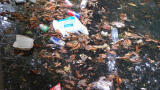
solid waste, and olive mill wastewater
(OMW) are generated. OMW is phytotoxic,
has antibacterial effects, and high pollution
potentials. Azraq bentonite (AB), reddish
volcanic tuff (RVT), lime (CaO), aluminum
sulfate (alum), ferric chloride, and sodium
carbonate were used to remove turbidity
(NTU) and non-specific organic compounds
(COD) from OMW. The results showed that
RVT, ferric chloride, and sodium carbonate
are not efficient in removing turbidity (NTU)
and COD from OMW. The removal of NTU
and COD using alum was 95% and 65%
respectively. Alum is not recommended,
since it is expensive to use. The removal
of NTU and COD using lime were 99%
and 69% respectively. AB showed 96%
removal of NTU and 37.5% removal of COD.
Lime and AB are inexpensive and locally
available materials. The treated OMW can
not be used in agriculture because of their
high dissolved solids content; therefore,
natural evaporation in shallow ponds, after
lime or AB treatment, might be an
acceptable solution.


 Product directory