Water/Wastewater
A Novel Biological Approach for Treatment of Stripped-Sour Water
Apr 01 2010
Author: Netta Hirshberg
Crude oil containing sulfur, often in the form of hydrogen sulfide, in excess of 1%, is referred to as sour crude oil. Refineries that process sour crude oil generate sour water in multiple ways. The processes of desalting, fractional distillation in atmospheric or vacuum towers, cracking in thermal or catalytic units, and hydrodesulfurization (HDS) all contribute to a sour water by-product. Other significant sour water contaminants include
ammonia, phenol and cyanide. The first level of treatment for sour water is typically done in a sour water stripper, whereby large quantities of hydrogen sulfide and ammonia are steam-stripped from the water. However, the high contamination level found in the remaining stripped sour water requires additional treatment prior to discharging into the environment or recycling for other refinery processes.
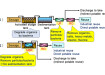
Typically, the combined effluent undergoes a gravitational separation (API). Due to density differences, free oil is separated from the water and forms an oily upper layer which is then skimmed off. Heavy components such as sand or other particles are collected from the bottom of the tank, and the water flows to the next separation step. Dissolved Air Flotation (DAF) or Dissolved Gas Flotation (DGF) mainly allows separation of dispersed oil from the water. The separation is accomplished by forcing air into a solution within the wastewater through a high pressure system. The pressure is then released, causing the air to form tiny bubbles which adhere to the oil globules. This process elevates the oil globules which can be easily extracted by skimming or filtration. The pre-treated wastewater subsequently undergoes a biological treatment in which dissolved contaminants are biodegraded. The most common biological method is known as activated sludge. The dissolved contaminants are consumed by the microorganisms within the tank to form additional bio-mass (sludge). Water and sludge are washed out of the bioreactor and into a clarifier. The solid waste (sludge) that settles on the bottom of the clarifier is composed of both live and dead bacteria. Approximately 50-70% of this sludge is transported back to the bioreactor (note the two-way arrow between the clarifier and the bioreactor) in order to continually re-activate the biological process. The other half of the sludge is fed into a de-watering system for removing additional water and is then disposed of in a landfill. The effluent from the clarifier passes through a filtration unit (usually ultra-filter) into a settling pond and only then is ready for discharge.


Events
May 05 2024 Seville, Spain
May 13 2024 Munich, Germany
May 23 2024 Beijing, China
May 23 2024 Beijing, China
Jun 10 2024 Algiers, Algeria